If you have spent any time reading about office design trends 2026, you have probably noticed something… Most of the lists say the same thing:
- Biophilic design
- Acoustics
- Hybrid working
- Sustainability
- Smart tech
All real, all worth knowing about, but rarely with the one piece of information you actually need before you commit to anything, which is what it costs and whether it is worth doing for a business like yours.
So this guide is a little different. We will cover the trends shaping workplaces in 2026, because they genuinely matter, but we will also be straight with you about which ones earn their keep, roughly what each one costs to put in, and how to get the effect on a sensible budget. We have been designing and fitting out offices since 2009, for everyone from growing SMEs to names like Harrods, Michael Kors and Mini, and the same truth holds across all of them… A trend is only useful if it solves a real problem in your office.
Let’s get into it.
How to read this list
A quick word before the trends themselves. Not every trend here is for every business, and trying to do all of them at once is the fastest way to blow a budget on things your team never asked for.
The offices that work best in 2026 are not the ones that tick every trend. They are the ones that picked the two or three changes that fixed an actual frustration, whether that is nowhere quiet to take a call, a tired space that no longer reflects the brand, or a layout built for a five-day-a-week team that now comes in three.
So read this as a menu, not a checklist. Match the trends to your goals and your budget, and ignore the rest with a clear conscience.
The people-first trends
The biggest shift in 2026 is not a material or a colour. It is that the office now has to earn the commute. People can work from home, so the workplace has to give them something home cannot. That starts with designing around the people in it.
Wellbeing, comfort and control
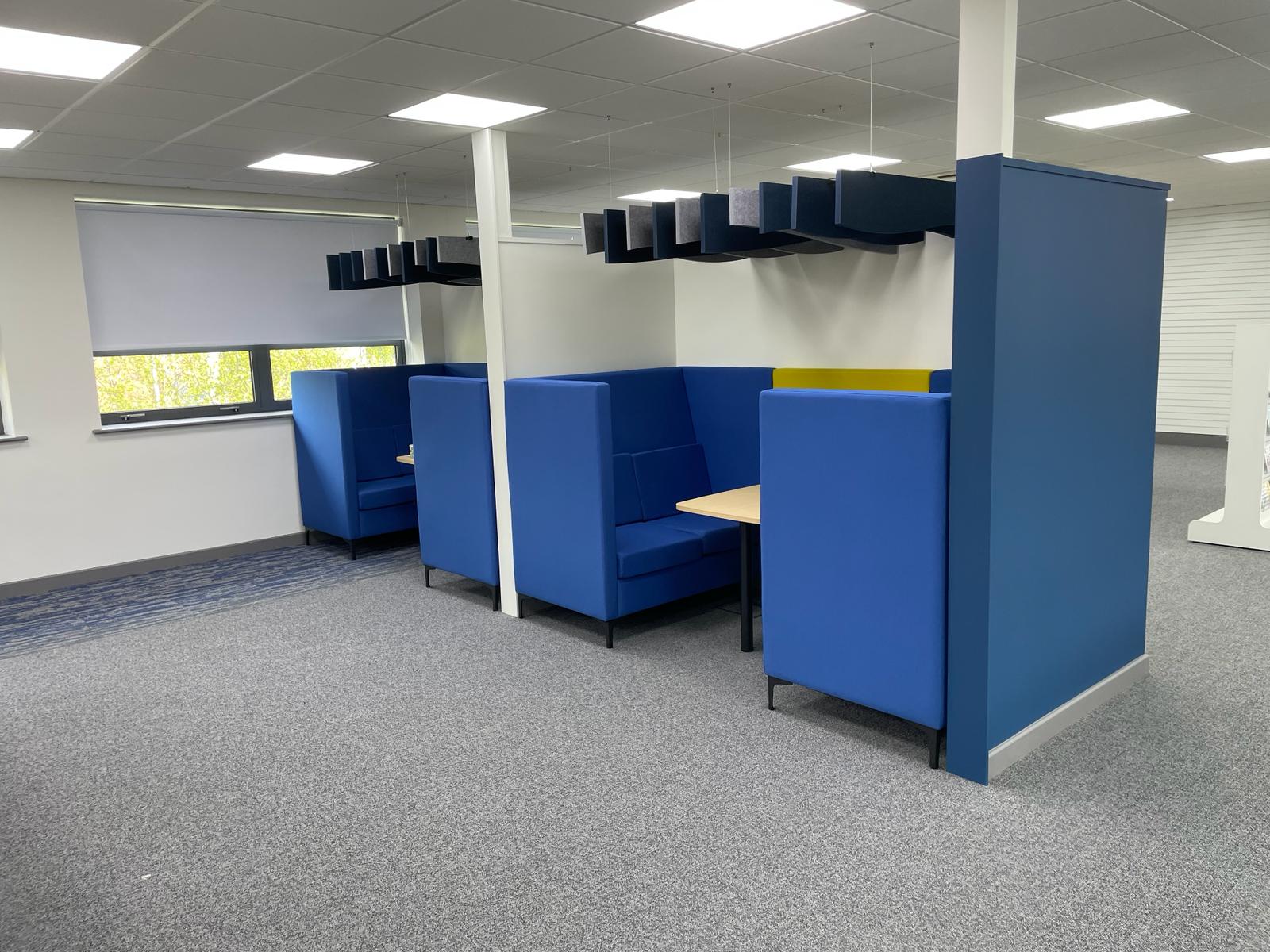
The single strongest theme this year is giving people control over their own environment. When employees can adjust where they sit, how much noise is around them, the light, and whether they are in the thick of it or tucked away, they trust the office more and use it better.
In practice this means offering a spectrum of settings rather than one open floor: a quiet corner with good light, an enclosed pod for focus, a sheltered booth away from the main walkways. The mistake we see most often is a single “wellness room” stuck in a leftover corner that nobody uses because it never felt private or purposeful in the first place.
How to do it affordably:
You do not need a major build for this. Reconfiguring your existing layout to create zones, adding a couple of acoustic booths, and being deliberate about who sits where will get you most of the benefit. It often sits inside a mid-level refurbishment rather than a full fit out.
Neurodiversity and inclusive design
Around one in seven people are neurodivergent, and designing with that in mind makes a space better for everyone, not just a few. The thinking has moved on from a single “quiet room” to a more holistic approach: predictable layouts that are easy to navigate, control over lighting and sound, minimal visual clutter, and a genuine choice of environments so people can find the setting that suits how they work.
Practical moves include controlled and adjustable lighting, softer and less reflective finishes in calmer zones, clear wayfinding, and seating options that let people face away from busy routes if they want to.
How to do it affordably:
A lot of this is about decisions rather than spend. Specifying dimmable lighting, choosing calmer finishes in certain areas, and planning the layout thoughtfully cost little more than the standard version of the same thing. It just needs to be designed in from the start.
Biophilic design
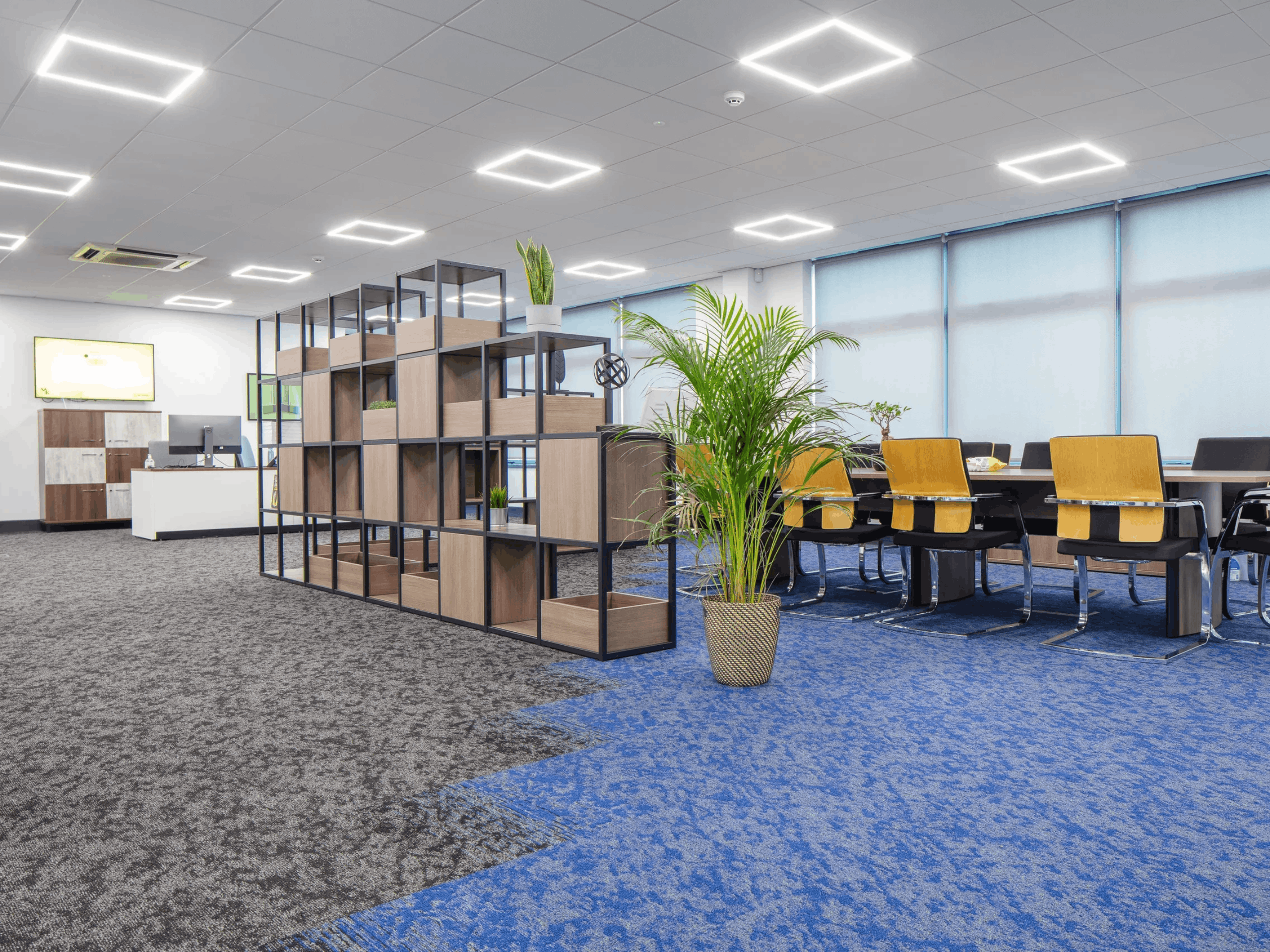
Bringing nature into the office is no longer a nice-to-have, and the reason it has stuck around is that the evidence is solid. Studies have linked workplaces with natural elements to measurably higher wellbeing, productivity and creativity. In 2026 it has moved from “if budget allows” into standard practice.
The trend covers natural light first and foremost, then greenery, natural materials like wood and stone, and organic textures and patterns. Living walls and planted dividers are the headline version, but a well-placed set of plants and a layout that gets daylight to more desks does a lot of the work.
How to do it affordably:
Maximising natural light costs nothing once it is planned in, and good-quality planting is one of the cheapest ways to lift a space. Living walls look fantastic but carry an ongoing maintenance cost, so go into that one with your eyes open.
The space and layout trends
Activity-based zoning and the end of the desk farm
The endless grid of identical desks is on its way out. In its place, offices are being split into zones built around what people actually do across a day: focused solo work, quick one-to-ones, larger collaboration, and informal catch-ups. The idea is that you choose the setting that fits the task rather than doing everything from the same chair.
This is the trend that quietly underpins most of the others, and it is the one that makes a hybrid office feel worth visiting. When we refurbished the open-plan space for Headstock Group, the value came less from any single feature and more from giving people distinct areas to move between.
How to do it affordably:
Zoning is mostly a space planning exercise, which makes it one of the better-value changes you can make. You can define zones with furniture, flooring changes and partitioning rather than rebuilding walls everywhere.
Acoustic design and quiet spaces
If there is one near-universal trend across every credible source this year, it is acoustics. With so much of the working day now spent on video calls, poor sound has become the number one complaint in most offices. Open-plan layouts made the problem worse, and 2026 is the year businesses are actually fixing it.
The toolkit includes acoustic panels and ceiling treatments, sound-absorbing materials, dedicated quiet zones, and enclosed booths and pods for calls and focused work. Feature ceilings made from timber slats or acoustic felt are having a real moment, partly because they look good and partly because they work.
How to do it affordably:
Acoustic booths and pods give you private call space without building new rooms, and they can usually be added without major disruption. Soft furnishings, carpet and ceiling treatments all help and can be rolled into a refresh.
Hospitality-inspired and social spaces
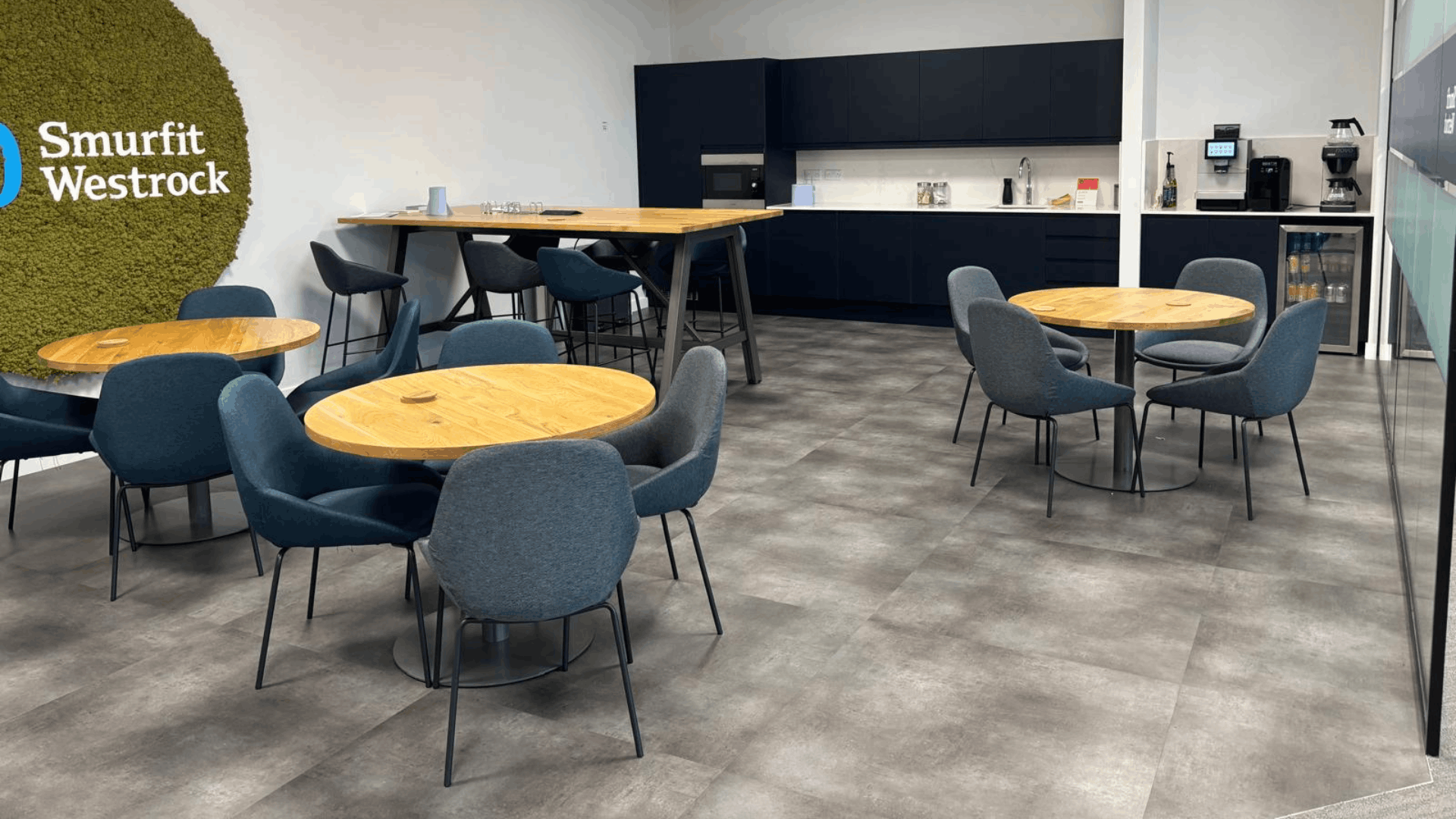
Offices are borrowing heavily from hotels, cafes and lounges. The thinking is simple: if you want people to come in, make the space somewhere they would choose to be. That means proper coffee, comfortable lounge seating, communal tables and breakout areas that invite people to stop and talk rather than rush back to a desk.
This overlaps with what some people call “resimercial” design, which blends the comfort of home with the practicality of a workplace. The Card Factory office we completed in Wakefield is a good example, with its tea point, high-table seating and relaxed breakout areas doing as much for the culture as any meeting room.
How to do it affordably:
A good breakout area is one of the highest-impact things you can spend on, because everyone uses it and it shapes how the whole office feels. You can scale it to budget, from a smart tea point and some quality seating up to a full social hub.
The desk, reimagined
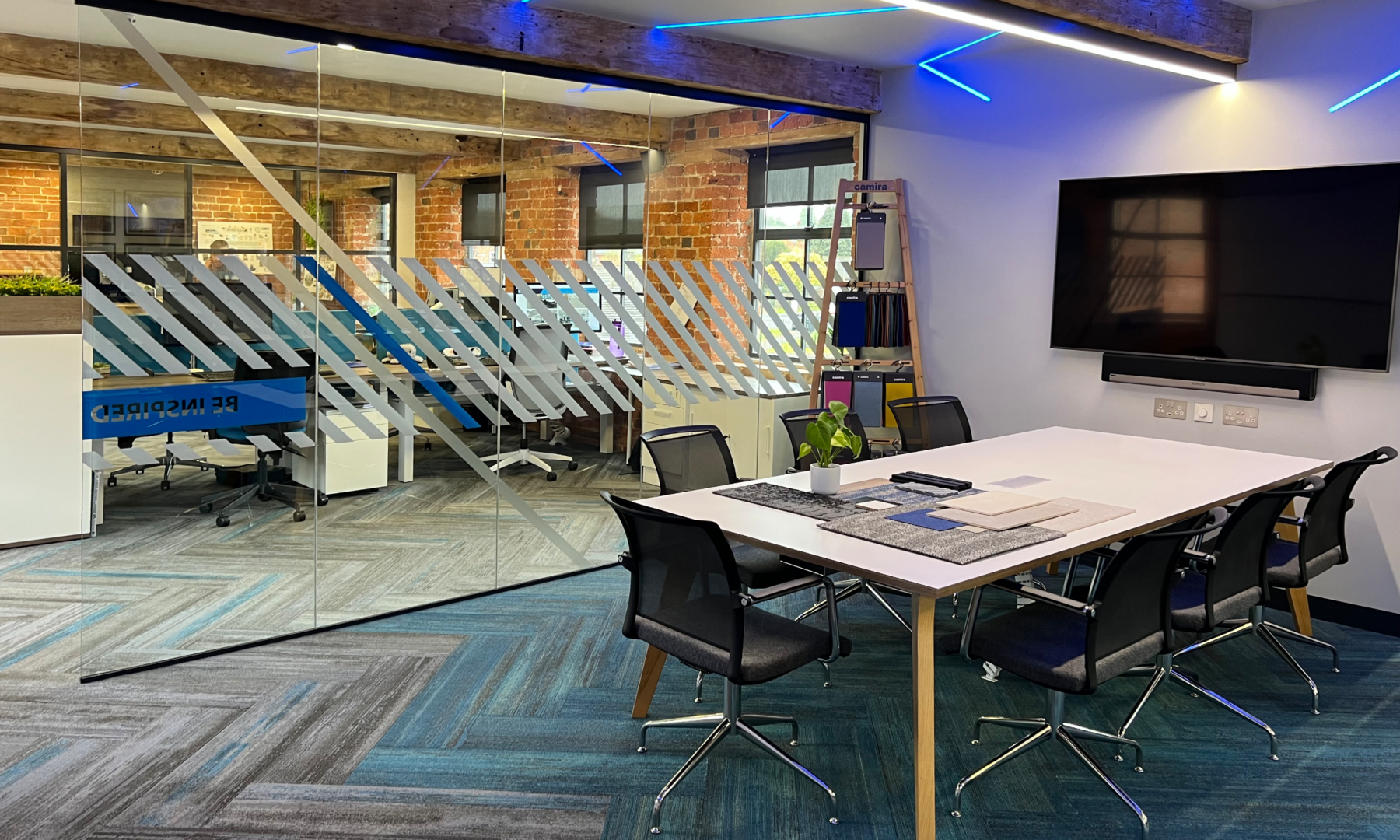
After a few years of “hot-desk everything”, the desk is making a comeback, just in a smarter form. Blanket hot-desking created real friction: people lost time setting up each morning, ergonomics became inconsistent, and storage turned into a headache. The 2026 approach is more balanced, with dedicated desks for roles that need them and “neighbourhoods” where a team shares a home zone.
What people expect from a desk has also changed. More screens, more devices and more power demands mean the desk is now an infrastructure decision as much as a furniture one. Height-adjustable desks have shifted from a perk to a baseline expectation.
How to do it affordably:
If your existing desks are sound, you may not need to replace them, just rethink how they are allocated and add better power and cable management. Where you do buy, height-adjustable is worth the modest premium.
The performance trends
Smart technology and practical AI
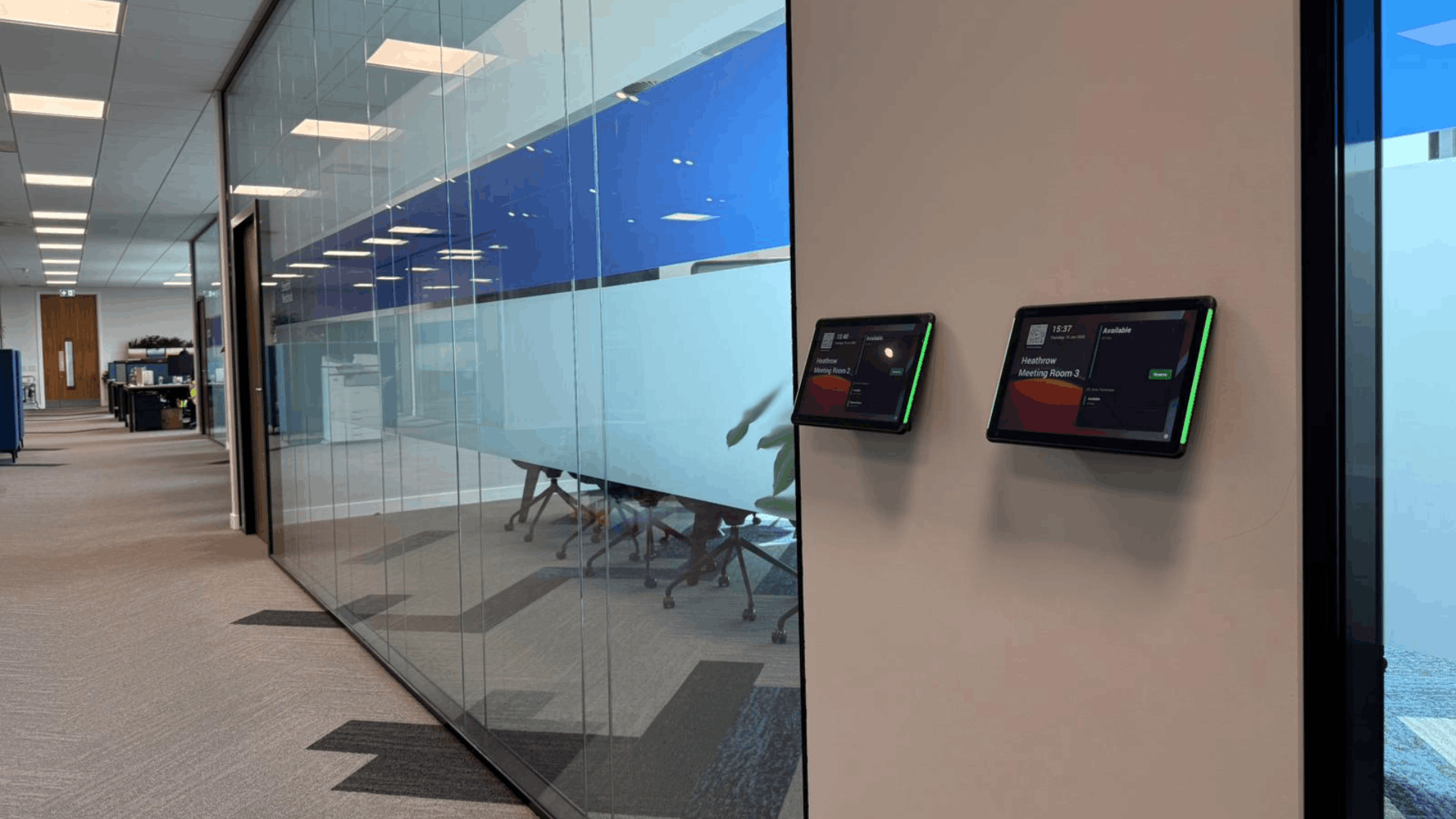
Smart building tech has gone from novelty to genuinely useful. The version that matters in 2026 is the practical kind:
- Occupancy sensors that show you which spaces actually get used
- Room-booking systems
- Lighting and heating that adjust to how busy a space is
- Air quality monitoring
The data is what makes the difference, because it lets you design and run the space around real behaviour rather than guesswork.
AI sits underneath a lot of this, mostly in the background, helping systems respond to usage patterns and flag maintenance before something breaks.
How to do it affordably:
You do not need a fully automated building. Start with the basics that pay for themselves, such as sensor-based lighting and a decent room-booking system, and add from there. Much of this is more relevant to larger floorplates than to a 30-person office.
Sustainability as standard
Sustainability is no longer a trend so much as a baseline expectation. Clients, staff and increasingly landlords expect it, and the practical measures are well established:
- LED lighting with smart controls
- Efficient heating and ventilation
- Recycled-content and low-VOC materials
- Responsibly sourced timber,
- Reusing existing furniture and fittings where you can
The single most useful thing to understand is that sustainability is far cheaper to design in than to add later. Specify an efficient system at the start and it costs little extra. Retrofit it afterwards and the price jumps.
How to do it affordably:
The quick wins are LED lighting, sensors and reusing what you already have. If your business reports on ESG, a refurbishment is also a natural moment to improve your EPC rating and tick off targets you are already committed to.
Modular and adaptable design
The other lesson businesses have taken from the last few years is that needs change fast, so spaces need to flex. Modular furniture, movable partitions and a layout that can be reconfigured without a refit all protect you against the next restructure or headcount change.
The honest version of this trend matters, though. Plenty of “flexible” offices look adaptable but cannot actually change cheaply or quickly. Real adaptability is built into the bones of the space, in things like power distribution and circulation routes, not just furniture on castors.
How to do it affordably:
Prioritise adaptability where change is most likely, such as team areas and meeting spaces. Movable partitioning and modular furniture cost more upfront than fixed equivalents but save you a great deal on the next change.
The look and feel
Warm lighting, earthy materials and considered colour
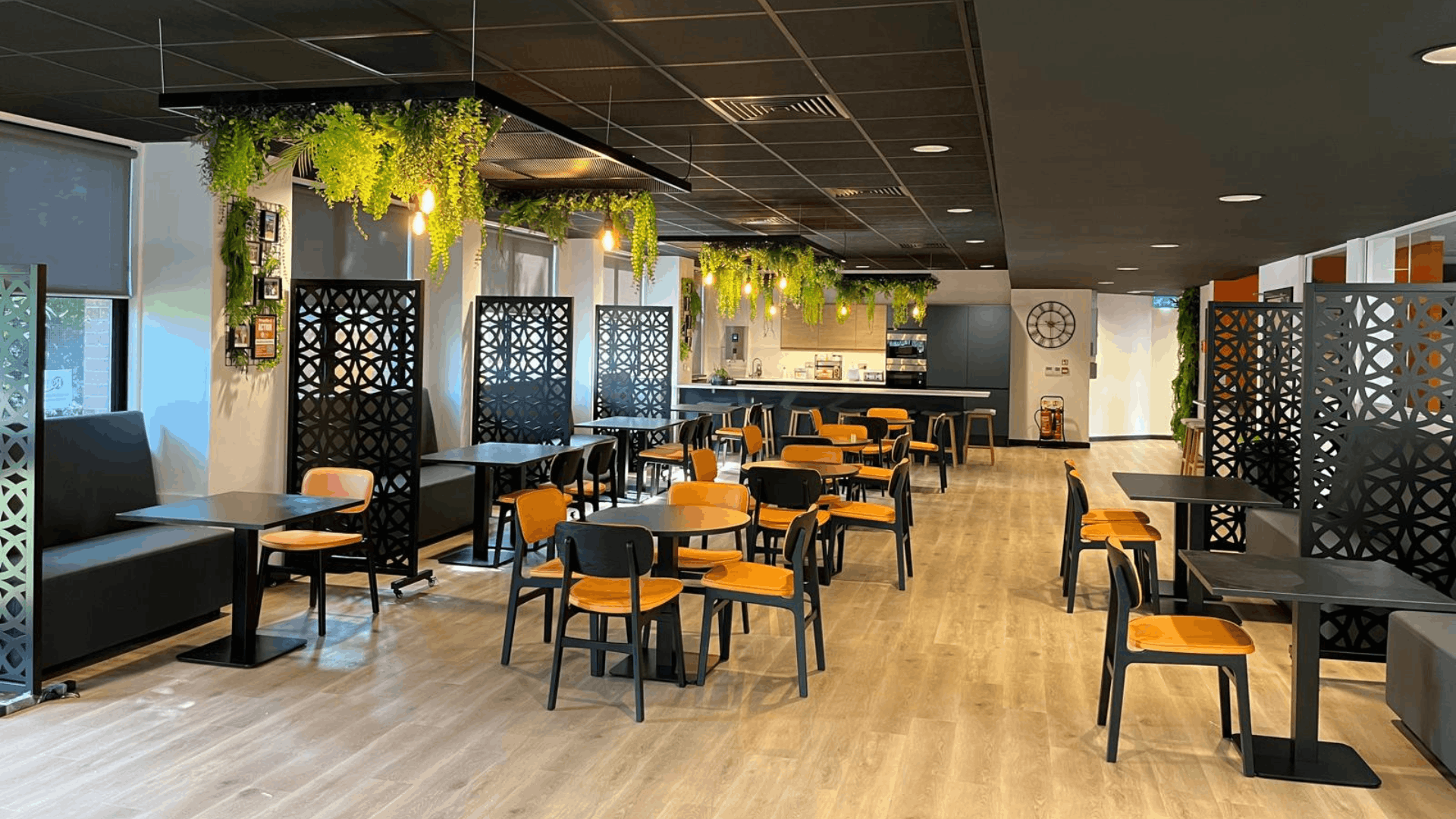
The clinical, cool-white, grey-everywhere office is being retired. In its place, 2026 leans warm and human:
- Softer lighting tones
- Earthy and restorative palettes of warm neutrals
- Muted greens
- Clay tones and deep blues
- Tactile natural materials like wood grain and woven fabrics
Colour has become more considered too. The trend is away from loud brand colours splashed across every wall and towards strategic, subtle use of colour that supports different work modes and weaves the brand in through finishes and materials rather than big graphics.
How to do it affordably:
Paint, lighting and soft furnishings are the cheapest way to transform how a space feels, which makes this one of the best-value trends on the list. A considered repaint and a lighting refresh can change the whole character of an office for a relatively small outlay.
Trends worth ignoring in 2026
This is the part most articles skip. Not every popular idea deserves your budget, and a few are actively counterproductive.
- The “Instagram office”. Bright feature colours everywhere, statement everything, finishes chosen to photograph well. It looks great on a website and exhausts the people who have to work in it every day. Overstimulation is a real cost.
- Blanket hot-desking. Stripping out dedicated desks to save space sounds efficient, but if people cannot do focused work comfortably, they simply stop coming in. A balanced mix beats a hot-desk free-for-all.
- Collaboration-only floors. Some offices over-corrected into wall-to-wall open collaboration with nowhere to concentrate. The result is noise, no focus, and a sense that you have to be “on” all day. Quiet space is not optional.
- Tech for the sake of it. A wall of screens and gadgets that nobody quite knows how to use is money spent on looking modern rather than being useful. Good tech disappears into the background.
The common thread is that anything chosen to impress rather than to help your team is usually the first thing you will regret.
What these trends actually cost
Here is the section no other trends article seems willing to put in writing. Costs vary enormously with the building, its age, the state of its services and the spec you choose, so treat these as starting points rather than a quote. As a rough guide for the UK in 2026, office work tends to fall into these bands:
Level of Work | Indicative Cost (Per Sq Ft) | What It Typically Covers |
Cosmetic Refresh | £25 to £45 | Paint, flooring, lighting refresh, some furniture, minor layout changes |
Mid-Level Refurbishment | £45 to £75 | New zoning and partitioning, acoustics, breakout areas, furniture, services updates |
High-Specification Fit Out | £75 to £120+ | Full strip-out and refit, bespoke design, full services, premium finishes |
For regional baselines, the Cushman & Wakefield office fit out cost guide is a useful reference, and the figures climb noticeably in London compared with the Midlands and the North.
A few budgeting points worth keeping in mind whichever route you take:
- Set aside a contingency of 10 to 20 percent. Live buildings reveal surprises behind the walls.
- Do not budget only for the visible work. Design fees, IT and cabling, furniture delivery and installation, and waste removal all add up.
- You may be able to claim capital allowances on qualifying spend such as lighting, power and data cabling, so it is worth a conversation with your accountant.
One thing worth knowing about how we work:
While some companies charge for design, we do not.
Turning trends into a real project
Reading about trends is the easy part. The harder question is how you actually deliver them, and that almost always comes down to one of two routes: a refurbishment of your existing space, or a full fit out, usually in a new one.
The right answer depends on what you are starting with and what you are trying to fix. If you are staying put and want to modernise, most of the trends above are delivered through a refurbishment. If you are moving or taking on an empty space, you are into fit out territory. We break the difference down properly in our guide to office fit out vs office refurbishment, and if you decide a refurbishment is the route, our office refurbishment checklist walks you through every stage from planning to move-in.
The point is that trends are not the project. They are the ideas you bring to it. The project is the bit that turns them into a space your team actually wants to work in.
How Advanced Commercial Interiors can help
If you have got to this point and are starting to picture changes to your own office, that is exactly the conversation we are good at.
At Advanced Commercial Interiors, we have been delivering office design, refurbishments and fit outs since 2009, for businesses ranging from growing SMEs to names like Harrods, Michael Kors, Mini and Imperial Tobacco. We manage the whole project under one contract, design in-house, work to a fixed price with no surprises at invoice stage, and give you a single project manager who owns the outcome from the first survey to the final handover. We are CHAS and Constructionline accredited, our fitters are CSCS carded, and we are well practised at delivering work in occupied buildings with minimal disruption. We also do not charge for design.
We are based in Sandiacre, Nottingham, and deliver projects across the Midlands and the rest of the UK, including Derby, Leicester, Birmingham, Sheffield, Manchester and London.
Looking to Improve Your Space?
We have the knowledge and the know-how to take your space from an idea to a reality!
Whether you want a smaller-level refurbishment for an existing space, or you’re wanting a full fit out of a new building, we can help!
Frequently asked questions
What is the biggest office design trend for 2026?
If we had to pick one, it is designing around people rather than desks: giving employees genuine choice and control over where and how they work. Acoustics is the most universally adopted specific trend, largely because poor sound has become the top complaint in the era of constant video calls.
How much does it cost to redesign an office in the UK?
As a rough 2026 guide, a cosmetic refresh tends to start around £25 to £45 per square foot, a mid-level refurbishment runs around £45 to £75, and a full high-specification fit out can be £75 to £120 or more. Costs are higher in London than in the Midlands and the North. The only way to know your real figure is a detailed, itemised quote based on your space.
What is activity-based working?
It is an approach that gives people a range of settings designed for different tasks, such as focus areas, collaboration spaces, quiet booths and social areas, rather than a single assigned desk for everything. People choose the setting that suits the work in front of them, which is part of why it suits hybrid teams so well.
Are open-plan offices still a trend in 2026?
Pure open plan has fallen out of favour because it makes focus and private calls difficult. The 2026 version is “broken plan” or zoned design, which keeps the openness and flexibility while carving out quiet areas, booths and defined zones so people are not stuck with noise and distraction all day.
How do I make my office more appealing for hybrid workers?
Give people reasons to come in that they cannot get at home: good acoustics and proper space for video calls, comfortable social and breakout areas, a choice of settings for different tasks, and an environment that feels welcoming rather than clinical. The office has to earn the journey, and the trends in this guide are mostly different ways of doing exactly that.