Office partitions are becoming increasingly popular in office layout and design.
Ideal for enhancing privacy in the office by separating work areas, partitions offer an easy way to customise workspaces.
As well as enhancing the aesthetic appeal of your office, partitions and screens can also be chosen to solve specific challenges within your existing commercial space, such as poor room acoustics.
Advanced Commercial Interiors installs office partitions and screens across the UK.
If you are looking to improve your office environment by installing a partition or screen, this post will guide you on the different types available.
What Is An Office Partition?
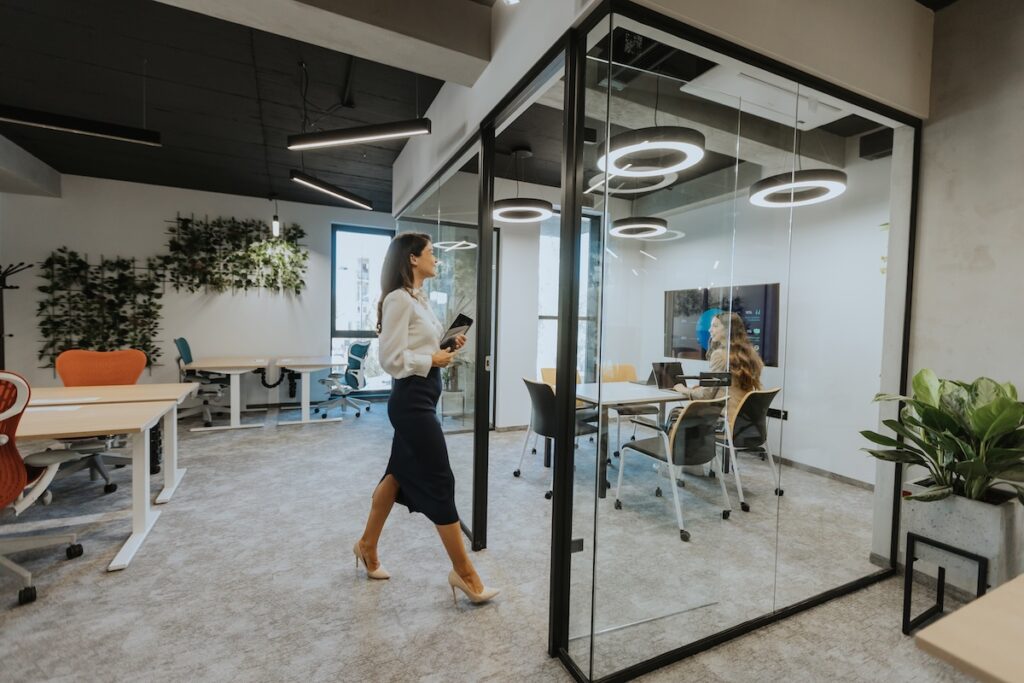
An office partition is a partition wall, typically used to divide spaces in workspaces to create separate offices or meeting rooms.
Partition walls can be made from glass, brick, metal, plastic or fabric. They can also be found in homes, commercial properties or industrial sites.
Depending on the type of partition you decide to install, you can even help protect your employees and equipment from the risk of fire damage and injury. Some partitions are fire-rated and in some cases, you may need this kind of partition, as it may be regulation.
Considering all the partition types available, the main benefits of using them include:
- Creates zoned workspaces
- Reduces office noise to improve concentration
- Enhances privacy
- Visually attractive
- Fully flexible solutions available
- Can be built with your company branding in mind (i.e. using coloured glass effects)
- Improves health and safety within industrial settings
- Lower cost compared to building a solid wall
Partitions offer space benefits in regard to usage and aesthetics and are ideal for implementing break-out areas, meeting rooms, quiet zones or boardrooms. With so many companies now opting for collaborative workspaces, office partitions are in popular demand.
When designing and installing an office partition, many businesses will benefit in different ways. Whilst some might install one for privacy reasons, others might see partitions as purely aesthetic.
As we take you through each of the different types next, the varying usages will become clearer.
Glass Partitions
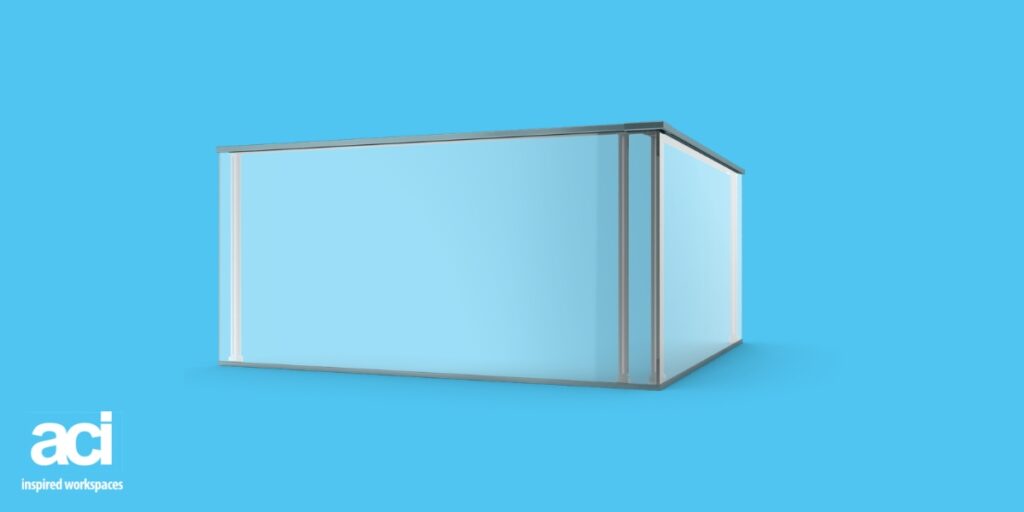
Glass offers a timeless, not to mention highly practical choice for zoning up your office space.
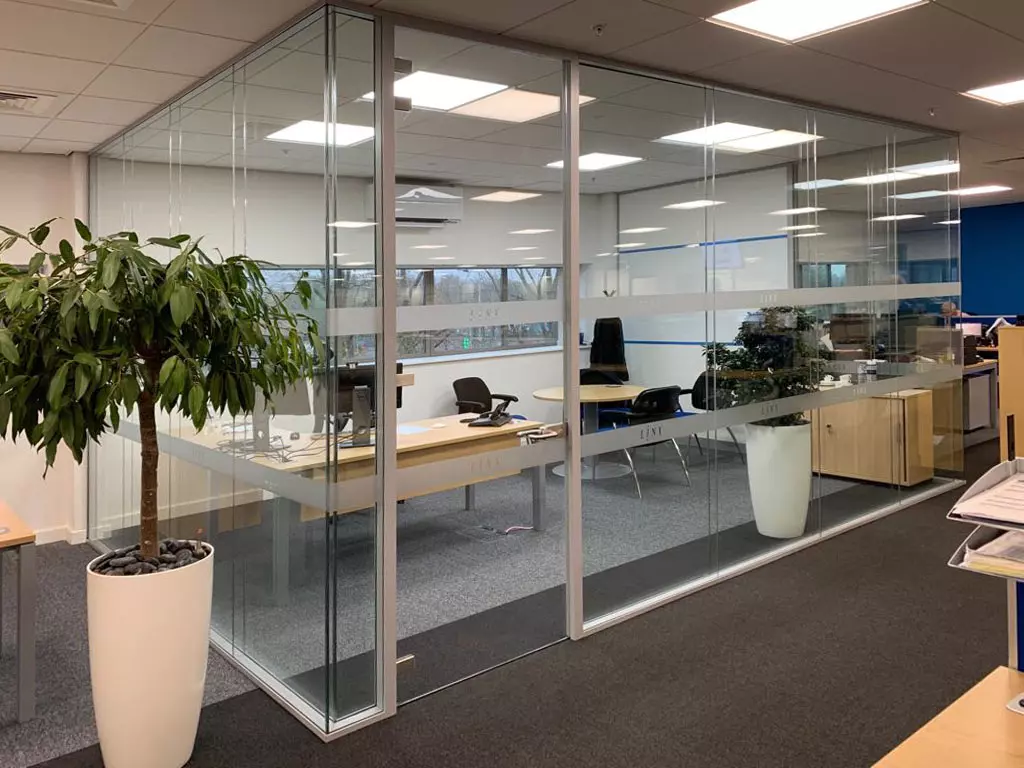
Consisting of small individual glass panels or full glass walls (as seen above), glass partitions are made of tempered or laminated glass. Depending on the design, glass partitions can be housed in aluminium or steel frames. Alternatively, it’s also possible to install frameless full-height glass partitions for an elegant, soft finish.
The glazing used within a glass partition can be clear to maximise the flow of natural light. Or, effects such as frosting, tinting or patterns can be applied to office partitions. Often, this is done to enhance privacy for meeting or board rooms. However, glass effects can also be used to brand your space.
Professional installation of glass partitions is necessary to comply with various safety and building regulations.
Pros
- Maximises natural light
- Modern, professional appearance
- Makes offices feel larger
- Sound reduction (with double glazing)
- Encourages visual openness
Considerations
- Less visual privacy (unless frosted or smart glass)
- Higher upfront cost
- Regular cleaning required
- Moderate sound insulation unless upgraded
Best for: When retaining as much natural light as possible is important to your office design. Ideal use cases include corporate offices, conference rooms or creative agencies wanting an open yet defined space.
Floor-To-Ceiling Partitions
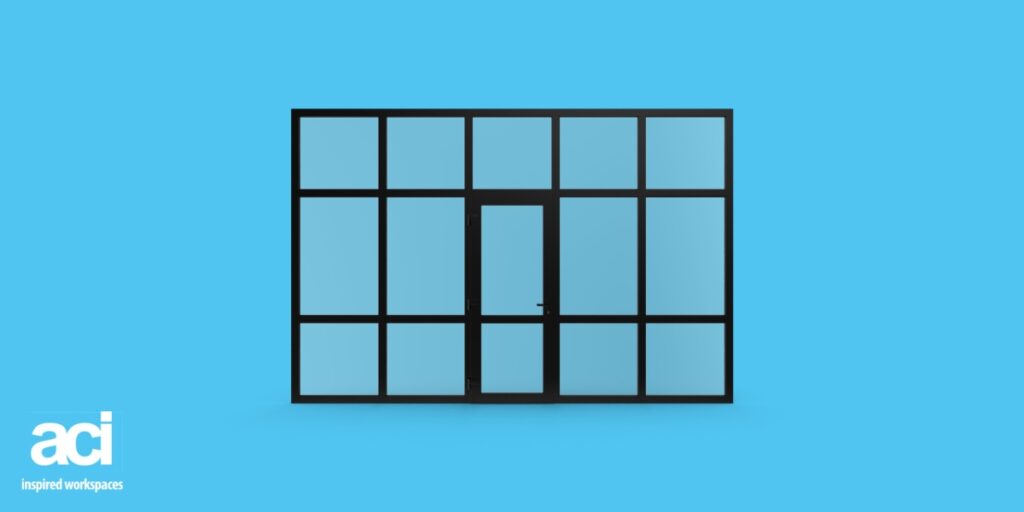
Floor-to-ceiling partitions, also known as full-height partitions or crittall glass partitions, are great for breaking up workspaces and large office areas. They don’t restrict visibility in the office but still have the ability to offer employees a certain extent of privacy.
These partitions can also easily be reconfigured and moved to offer employees and employers maximum flexibility and freedom in terms of where and how they work. Floor-to-ceiling partitions are typically made from metal.
Pros
- Excellent sound insulation
- Instantly updates office with a contemporary look
- Uses metal framing, which enhances glass strength and reduces maintenance
- Creates an enclosed space wherever it’s needed in the office
- Easy to integrate with doors and other building features
Considerations
- More expensive than a modest glass partition
- Longer installation time
Best For: Contemporary office buildings where there is a need to create a meeting room or creative nook. Ideal for breaking up large open plan spaces, full-height partitions suit a wide range of commercial settings.
Cubicles
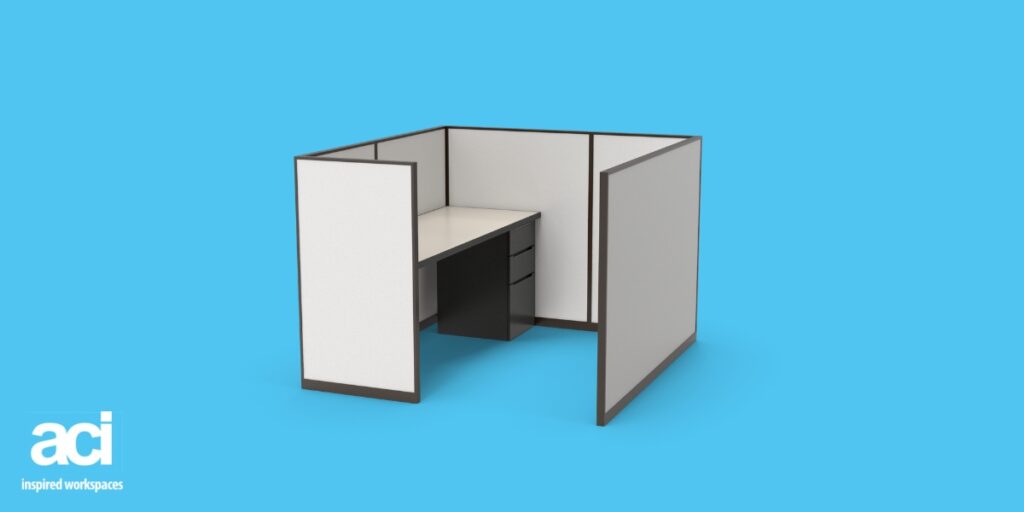
Cubicles are modular workstations with partial-height panel walls. Hence, cubicles are also referred to as “half-height” partitions.
Easy to move from one place to another, cubicles offer a moderate level of privacy to employees. Their design features four walls and an opening for people to enter and exit, so the space can be easily accessed throughout the day.
The fourth wall of a cubicle is half the height of the other three walls and there is usually a workspace present.
Pros
- Cost-effective for large teams
- Offers moderate privacy
- Easy to scale
- Reduces visual distractions
- Can be repositioned as needed
Considerations
- Limited sound privacy compared to full partition
- Can feel closed-in
- Geared towards individual work rather than collaboration
Best for: Improving call quality or individual focus in large open plan spaces, including when installing a full-height partition isn’t feasible. Cubicles are often used by call centres and large corporate offices.
Portable Partitions
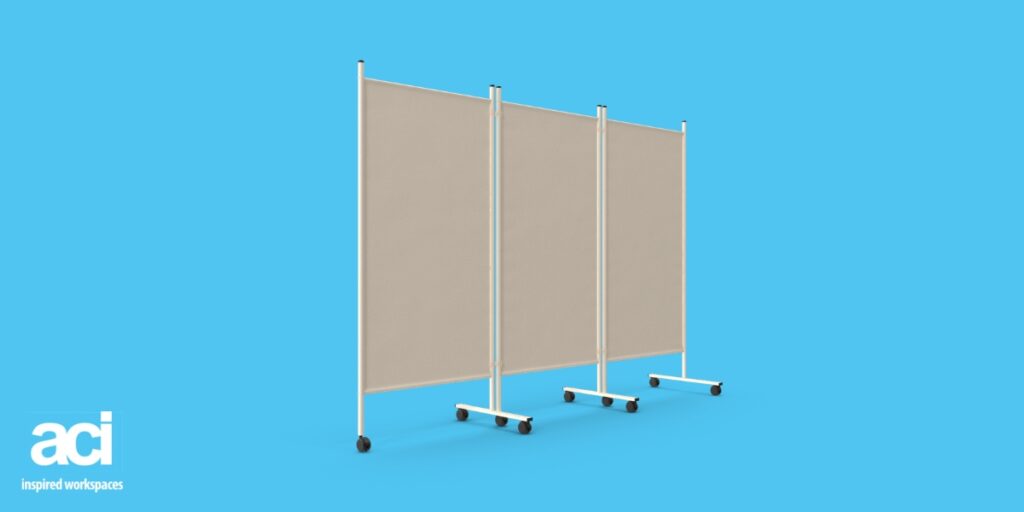
Portable office partitions usually have rollers attached at the bottom so that they can be easily transported from one place to another. Businesses looking for flexible, temporary partition solutions opt for portable office partitions to allow them to use the space when and if they need it and even remove it when the time comes.
While they offer minimal privacy compared with built-in partitions, some portable partitions do come with an enhanced noise-reduction feature, which employees can benefit from.
Pros
- Budget-friendly
- No construction required
- Highly flexible
- Quick setup
Considerations
- Minimal soundproofing
- Less stable
- Not suitable for permanent layouts
- Can look temporary
Best for: When the need to partition is temporary, including due to using a partition for the likes of training sessions, event areas, temporary teams or event areas. Likewise, when having a partition on rollers would offer the flexibility required to reposition the partition as needed and with total ease.
Accordion Walls
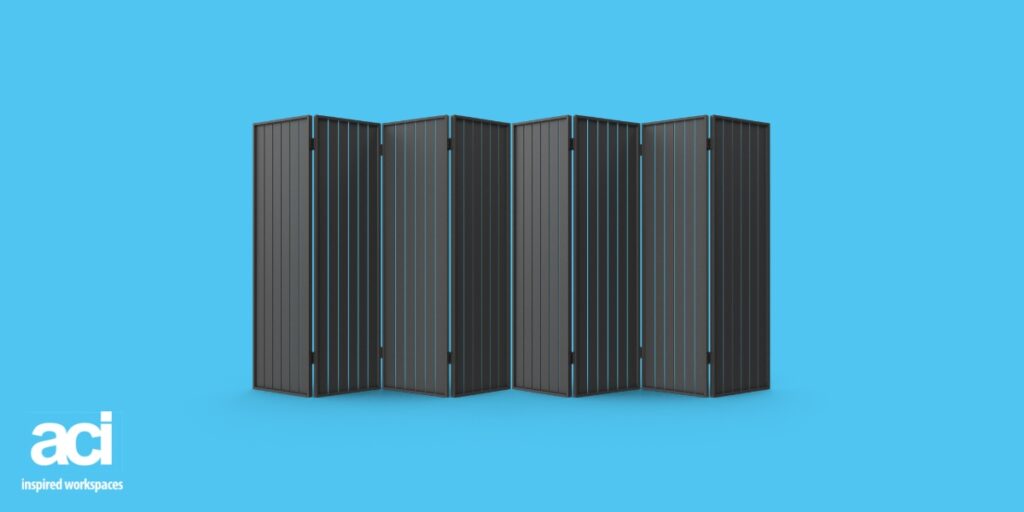
Accordion walls are very similar to portable partitions but provide full enclosure in the same way as floor-to-ceiling partitions. They are easy to move and install and can also be folded or closed in order to arrange or style them differently.
Sometimes, this design is referred to as a folding wall or a folding moving partition. They are typically ceiling-mounted track systems which can expand or collapse, based on whether you want to open or divide a space.
Pros
- Converts spaces quickly
- Space-saving design
- Good acoustic options available
- Ideal for multi-purpose rooms
Considerations
- Higher cost than portable partitions
- Requires professional installation
- Slightly less soundproof than permanent walls
- Track maintenance is needed over time to ensure smooth movement of the partitions
Best for: Dividing a large room or conference centre to effectively make two separate spaces. In this case, there is a need to separate the space beyond a standard partition, since the track will be installed along a large section of the floor. Examples of spaces that benefit from according walls include schools, training facilities and multi-purpose meeting rooms.
Free-Standing Office Partitions
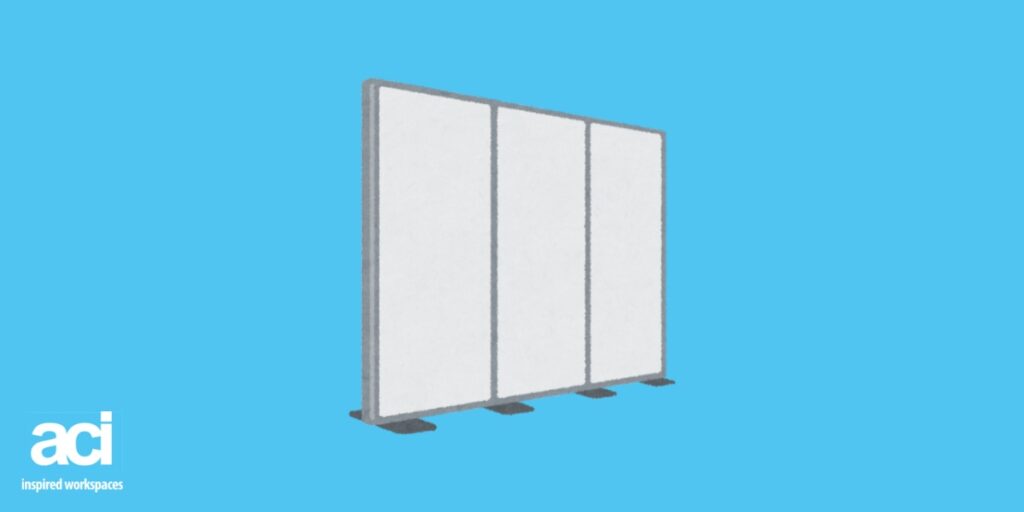
Free-standing office dividers are modular partitioning systems. They allow you to screen off areas in your office to give employees privacy and reduce sound pollution.
Dividers are useful for separating your open plan office into departments or smaller groups of workers. By adding a free-standing divider, they create private workstations for staff to concentrate by reducing external noise and visual distractions. These screens are available in varying features of sound control, fabric, colour and style.
While they aren’t as easy to move as rollered partitions, free-standing office dividers can still be relocated to other rooms as required.
Pros
- Affordable
- Extremely easy to install
- Flexible layout options
- Great for providing visual separation
Considerations
- Limited acoustic control
- Less durable than built-in systems
- Not fully private
- Can shift if bumped into
Best for: Temporary screening in the likes of open plan offices or co-working spaces. Free-standing dividers are also a great option for startups when a short-term solution is needed for room separation.
Choosing The Right Partition Type For Your Workspace
Various types of office partitions and screen types exist because every commercial environment has different challenges which need to be solved. Beyond offices, partitions can also be used in industrial environments such as warehouses.
So, when deciding on which partition you need, looking at all the benefits will ensure you’re getting exactly what you and your business need.
Ultimately, choosing the best office partition or screen for your office should consider the specific pain points of your environment.
Examples include:
- Too much noise is making it difficult to concentrate or hold phone conversations
- Not enough privacy for meeting rooms or other confidential discussions to take place
- Visual distractions impacting concentration or productivity
- Poor space organisation in open plan offices
- Overcrowding issues
- Health and safety concerns
- The need to use the space more flexibly (i.e. for training or events)
- A lack of professional branding throughout the space
From there, consider what’s feasible in terms of your budget and potential planning permissions that may be needed, especially if you are in search of a more permanent solution than flexible screening.
ACI – Discover Our Office Partitioning Services UK
Are you in search of office partitioning for your office?
Advanced Commercial Interiors (ACI) specialises in various office partition types. Whether you are looking to enhance your office privacy or simply want to use partitions for better zoning, our experts are here to help!
We install modern glazed partitions in open-plan offices. Plus, solid partition walls to create completely separate rooms within offices. For factories or warehouses, we also install industrial partitioning that is fully compliant with all required safety regulations.
Our HQ is in Nottingham and our partitioning service is available across the UK.
Our key locations include Birmingham, Derby, Grantham, Leicester, London, Manchester, Milton Keynes, Nottingham, Peterborough and Sheffield.
Let us know about your office partition requirements by sending us a message.
Or, to speak with our office partition specialists directly, please give us a call on 0115 939 7572.