Flooring is one of the few parts of an office that every person uses every day, and it is usually one of the first things to look tired. Get the specification right and a floor will quietly do its job for the best part of a decade or more. Get it wrong and you will be living with noise complaints, worn walkways and stained tiles long before the lease is up.
For most facilities and operations managers, the decision comes down to two products: commercial carpet tiles and luxury vinyl tile (LVT). Both are modular, both are designed for commercial use and both can look excellent. They perform very differently, though, and the right choice depends on how each area of your building is actually used.
This guide compares carpet tiles vs LVT on the points that matter in a working office: cost, acoustics, durability, maintenance, safety and sustainability. For a wider look at all the office flooring options available, including rubber, hardwood and polished concrete, our flooring guide covers the full range. Here, we focus on the head-to-head.
The Short Answer
In most offices, the best answer is not one or the other. It is carpet tiles where people sit, think and talk, and LVT where people eat, queue, spill and pass through. We zone floors this way on most of our office refurbishment projects because it puts each material where it performs best. The rest of this article explains why, so you can make the call for your own building.



What Are Carpet Tiles and LVT?
Commercial carpet tiles are squares or planks of carpet, most commonly 50cm x 50cm, with a stiff backing that keeps them flat and stable. Because each tile is a separate unit, a damaged or stained tile can be swapped without disturbing the rest of the floor. Tiles can also be lifted individually to reach the floor below, which is useful over a raised access floor. Backings range from standard hardback to cushion-backed tiles that add comfort and acoustic performance.
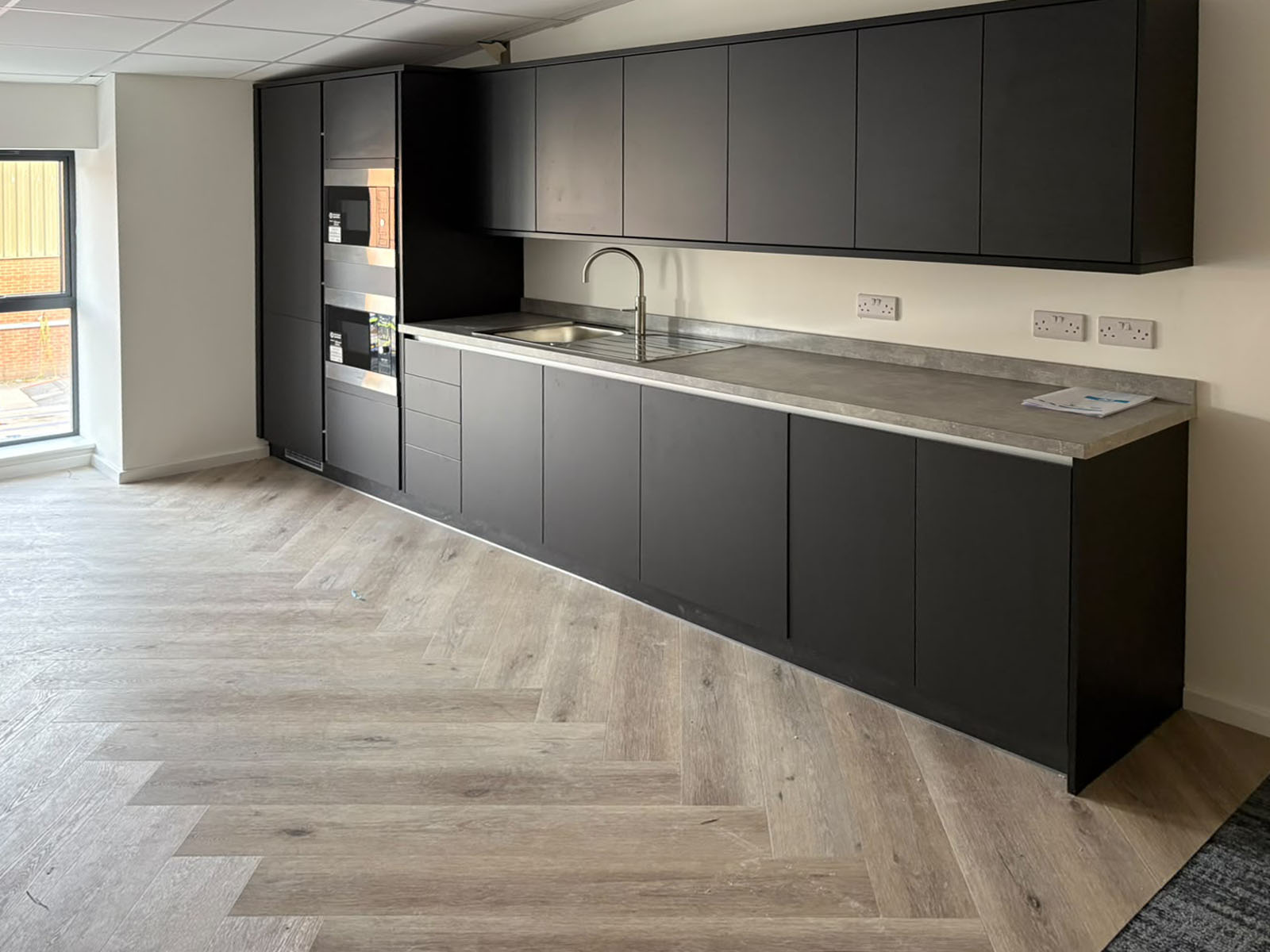
LVT is a layered vinyl product printed to look like timber, stone or concrete, with a clear wear layer on top that protects the design. Commercial LVT is usually glued down, although loose lay and click systems are also available. Its durability rating largely depends on that wear layer. A 0.55mm wear layer is typically rated Class 33 (heavy commercial) under EN ISO 10874, while 0.7mm reaches Class 34.
Whichever product you choose, check the use classification on the specification sheet. Class 33 is the realistic minimum for a busy office floor, for carpet tiles and LVT alike.
Cost: Upfront Price and Whole-Life Value
On upfront price, the two are closer than many people expect. UK supplier data shows most offices spend around £20 to £30 per m² on carpet tiles alone, before VAT and fitting, with fitting typically adding £10 to £20 per m². Commercial LVT with a 0.55mm wear layer typically comes in at £25 to £45 per m² installed. Designer ranges of either product can go well beyond these figures.
The bigger cost differences usually show up elsewhere. LVT is much less forgiving of an uneven subfloor, so it often needs more preparation, such as levelling compound, before it goes down. In our experience, subfloor preparation is where LVT budgets most often creep. Carpet tiles tolerate minor imperfections and are quicker to lay, which matters if you are refurbishing an occupied building floor by floor over a series of weekends.
Over the life of the floor, the picture shifts again. Industry guidance commonly puts commercial carpet tiles at around 7 to 12 years in service and properly specified commercial LVT at 15 to 25 years. Carpet tiles have one advantage that narrows the gap: you can replace a few worn tiles along a busy route instead of the whole floor, which extends the life of the installation overall.
Acoustics: The Biggest Difference Between Them
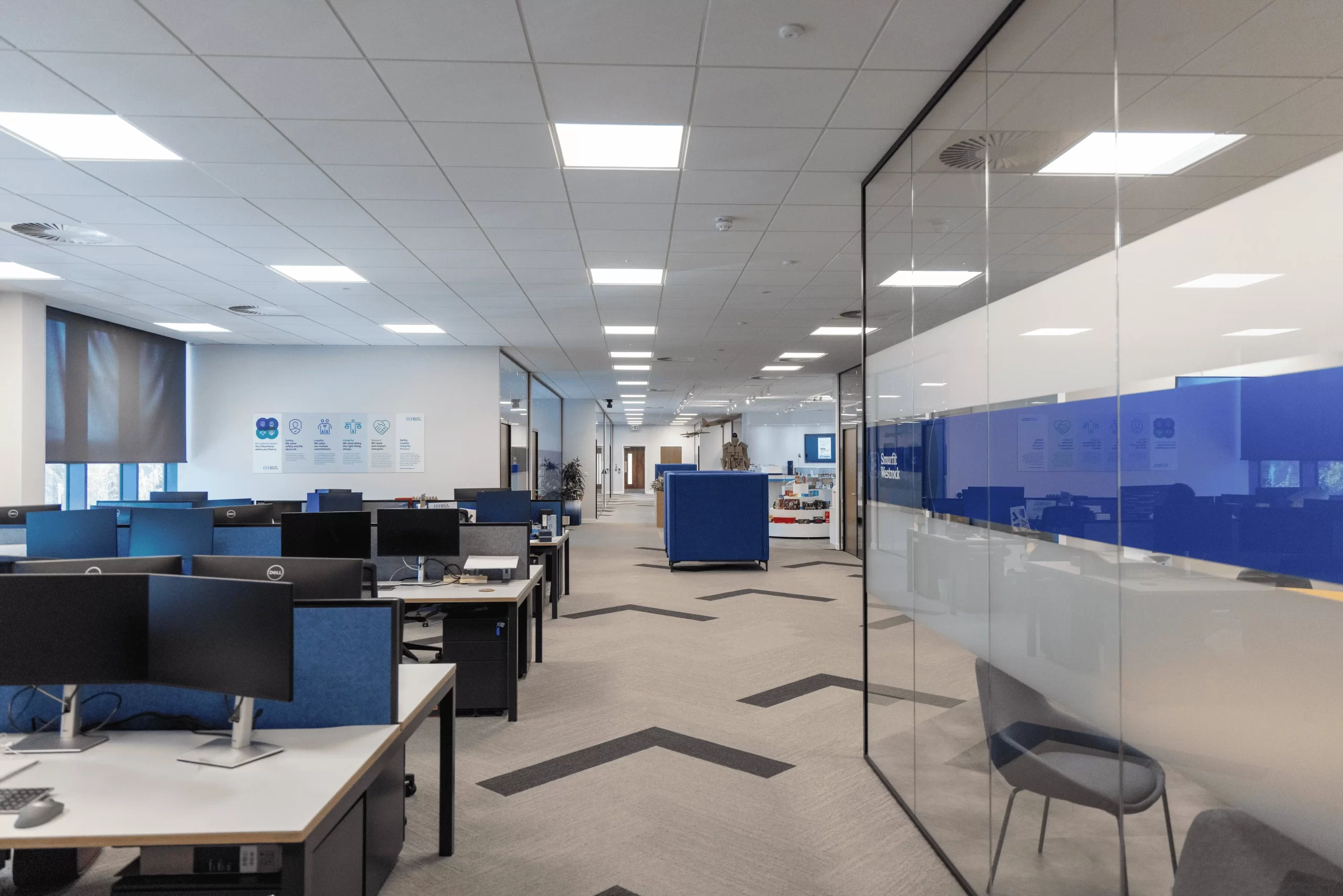
If one factor should drive your decision, it is sound. Hard floors reflect noise and textile floors absorb it, and in an open plan office your team will notice the difference every day.
There are two types of noise to consider. Impact noise is the sound of footsteps, chairs and dropped items, which travels through the structure and can disturb the floor below. Ambient noise is mostly conversation, which bounces around the room.
Carpet tiles lead comfortably on impact noise. Interface’s published acoustic data shows its carpet tiles reducing impact sound by 16 to 33 dB, against up to 19 dB for its acoustic-backed LVT. Standard glue-down LVT offers very little. Milliken puts it at around 2 dB, rising to 13 to 19 dB only with loose lay LVT that has a cushioned acoustic layer.
The gap is wider still on ambient noise. Milliken notes that even acoustic LVT will not absorb ambient sound the way textile surfaces can. Its research found hardback carpet tiles absorb three times as much noise as hard surface flooring, and cushion-backed tiles absorb 50% more again.
If you want luxury vinyl tile office flooring in a working area, specify an acoustic-backed product. You will also need to add sound absorption elsewhere, through acoustic ceilings, wall panels or soft furnishings. Our commercial interior design team plans flooring, ceilings and office partitions together for exactly this reason, because each one affects how a space sounds.
Durability and Wear
Both materials are built for commercial traffic, but they wear in different ways. Carpet tiles show wear as flattening and soiling, usually along main walkways, at entrances and under desk chairs. LVT shows wear as surface scratching and scuffing, often caused by grit carried in from outside, which is why a proper entrance matting system matters so much on hard floors.
Office chairs deserve a specific mention, because constant castor movement is one of the harshest tests any floor faces. Look for products that pass the castor chair test (EN ISO 4918). Reputable commercial ranges state this on their specification sheets, as in this example LVT specification.
LVT wins clearly on water. It is waterproof, while carpet tiles are not, which makes LVT the obvious choice for kitchens, tea points, washrooms and anywhere drinks are likely to end up on the floor.

Maintenance and Cleaning
Commercial carpet tiles need regular vacuuming, prompt spot cleaning and periodic deep cleaning to stay looking fresh. The trade-off is that a badly stained or damaged tile can simply be swapped for a spare. Keep a stock of spares from the original batch, because tiles from a later production run may not match exactly.
LVT is quicker to clean day to day, usually a sweep and a damp mop. Many commercial ranges include a PUR surface treatment designed for easy, low cost maintenance. Individual LVT tiles can be replaced too, although on a glue-down floor it is a more careful job than lifting a carpet tile.
Safety and Slip Resistance
Carpet tiles offer good grip underfoot in most conditions. LVT can be just as safe, but you need to check the numbers. The HSE’s preferred measure is the pendulum test, and a Pendulum Test Value (PTV) of 36 or above indicates low slip potential. Always ask for the wet PTV, not just the dry figure, especially for kitchens and entrances. For reference, one commercial LVT specification lists a wet PTV of 44 or more.
Where carpet tiles meet LVT, make sure the transition is properly detailed with a suitable threshold trim. A poorly finished join between two floor finishes is a trip hazard waiting to happen.
Sustainability and End of Life
Sustainability targets increasingly shape flooring decisions, and end of life is where the biggest gains are. M Moser estimates that at least 8 million m² of carpet tiles are discarded in the UK each year. On one project it documented, reusing the tiles instead of sending them to landfill added less than 1% to the strip-out cost. Manufacturer take-back schemes now cover both products. Tarkett’s ReStart programme, for example, collects vinyl and carpet tiles for recycling. Ask about take-back options at the specification stage, and about whether your existing floor can be reused before it is stripped out.
Where Each One Works Best
Here is how we typically zone a mixed office:
- Open plan desk areas: carpet tiles, ideally cushion-backed, to control noise and keep the space comfortable.
- Meeting rooms and private offices: carpet tiles, for speech privacy and a calmer feel.
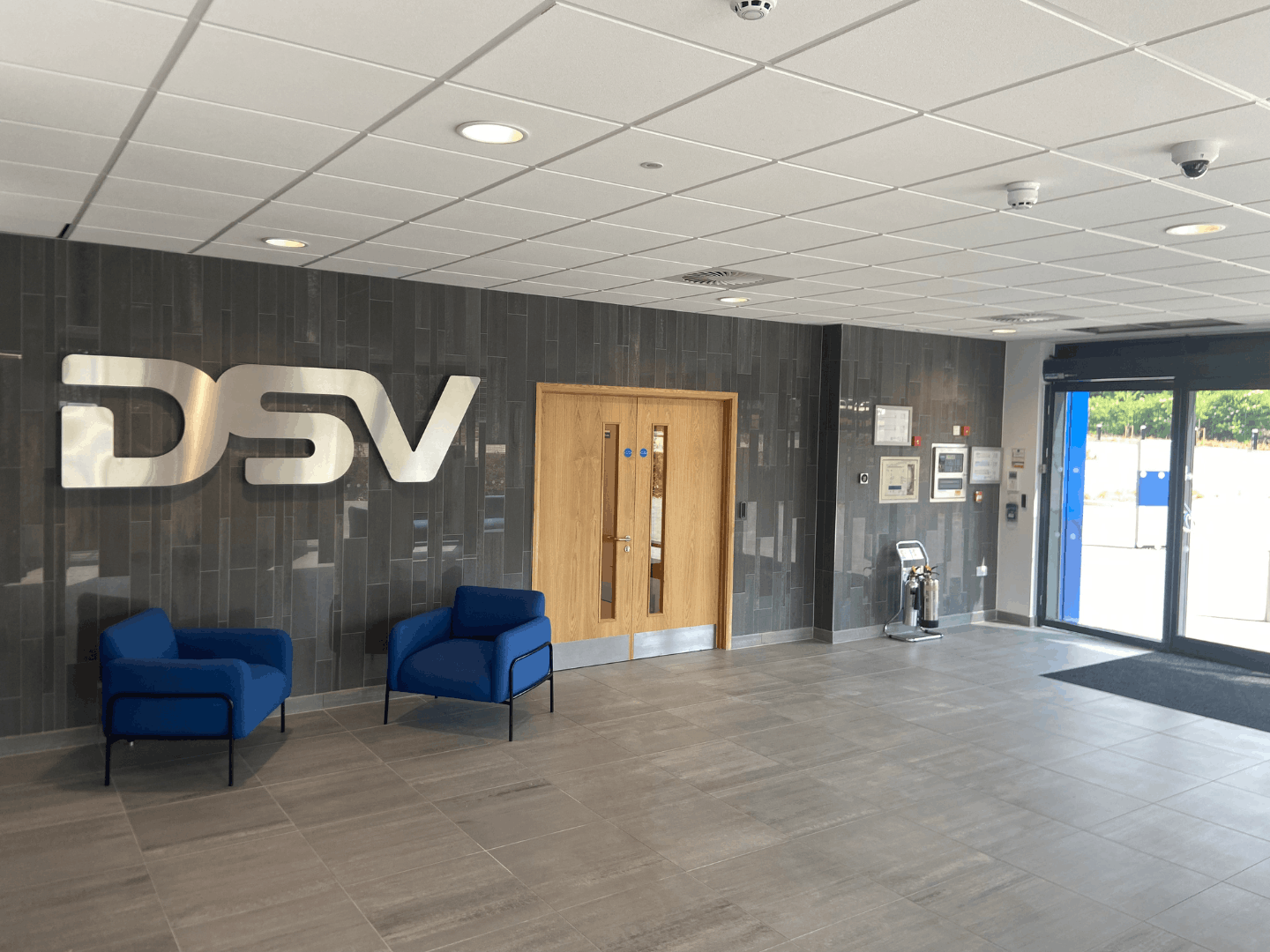
- Kitchens, tea points and breakout areas: LVT, for spill resistance and easy cleaning.
- Reception and entrances: LVT with an entrance matting system, for a durable first impression.
- Corridors: either, depending on traffic levels and how noise-sensitive the rooms on either side are.
Treat this as a starting point, not a rule. A design studio may want LVT throughout for the look and accept the acoustic trade-off, while a contact centre may want carpet almost everywhere. Good space planning maps how each zone is used before a single tile is chosen.
Questions to Ask Before You Sign Off a Flooring Specification
Before you approve a flooring specification, it is worth asking your contractor a few direct questions. What use class is the product rated to, and does it pass the castor chair test? What is its impact sound reduction in dB, and for LVT, does it include an acoustic backing? What is the wet slip resistance? How much subfloor preparation is included in the price? And what happens to the old floor and the offcuts? A contractor who can answer all of these clearly has thought about how your floor will perform, not just how it will look on handover day.
Getting Your Office Flooring Right
At ACI, we specify flooring as part of the whole scheme rather than as an afterthought, alongside layout, partitioning, ceilings, lighting and furniture. Whether you are planning a full office fit out, a CAT B fit out for a new lease, or an office refurbishment to bring a tired floor back to life, our team can help you choose the right mix of carpet tiles and LVT for the way your building works.
We are based in Nottingham and work with businesses right across the UK. Get in touch with our team to book a free site survey.
Frequently Asked Questions
Is LVT more expensive than carpet tiles?
Not always. Installed prices for commercial-grade products are fairly close. LVT often costs more once subfloor preparation is included, but it usually lasts longer.
Is LVT too noisy for an office?
Standard glue-down LVT does little to reduce noise, so it is best kept to kitchens, entrances and circulation areas. If you want LVT in working areas, specify an acoustic-backed product and add sound absorption elsewhere in the room.
How long do carpet tiles last in an office?
Industry guidance generally puts commercial carpet tiles at around 7 to 12 years. Lifespan depends on the quality of the tile, how busy the office is and how well the floor is maintained.