Office wall panels are one of the most versatile tools available to commercial interior designers and fit-out specialists.
Whether you are managing noise levels in an open plan office, creating visual separation between departments or simply improving the aesthetics of a tired workspace, the right panel solution can make a significant difference to how a space feels and functions.
At ACI, we often install office wall panels as part of our office fit outs and refurbishment projects.
This guide covers the main types of office wall panels, explains how each one works and sets out the specific workplace problems they are best suited to solving.
Why Choose Wall Panels For Your Office?
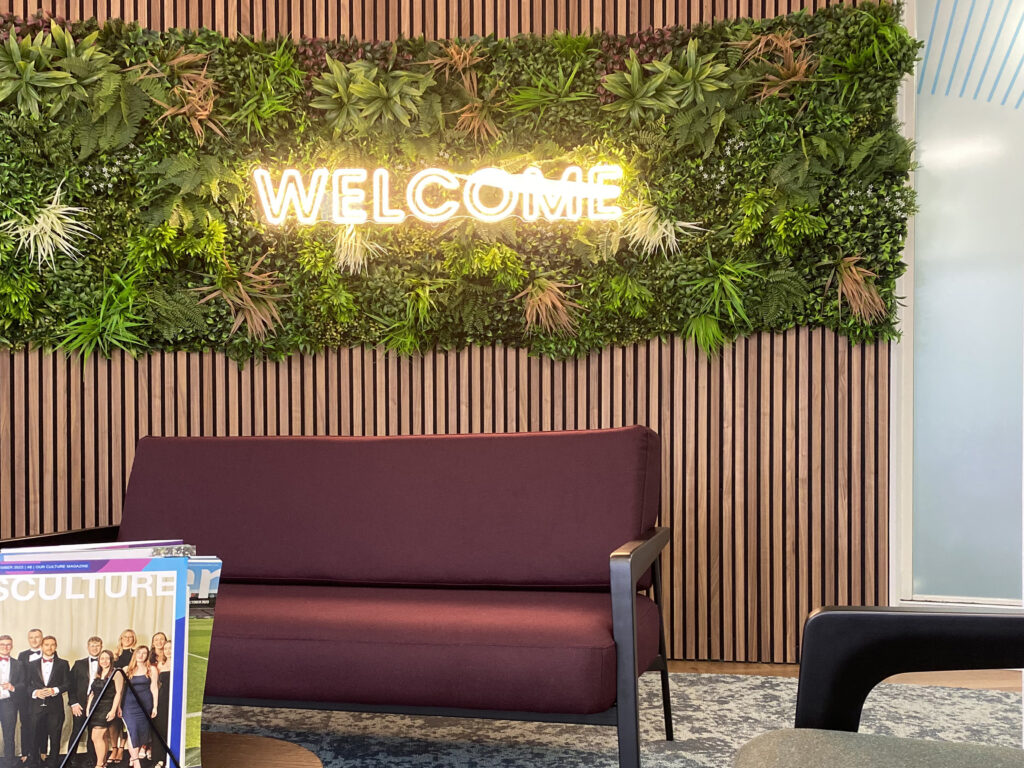
When it comes to choosing a wall covering for your office wall, there are many options to consider.
However, what’s different about wall panels compared with other types of wall coverings is that they do far more than improve how an office looks. In a modern workplace, wall panels are a practical tool for managing the acoustic environment, controlling how space is divided and maintaining surfaces that are easy to keep clean.
Open plan layouts, while popular for encouraging collaboration, create real challenges around noise and concentration. Hard wall surfaces reflect sound rather than absorbing it, which leads to the kind of background din that makes focused work difficult and raises stress levels over time. Wall panels address this directly, but their usefulness extends well beyond acoustics.
For instance, they can define zones without the cost of structural work, refresh the look of a dated interior without a full refurbishment and protect high-traffic surfaces from the daily wear that painted plaster cannot withstand.
For businesses thinking about a fit out or refurbishment, wall panels often represent one of the highest-impact investments available, delivering improvements to sound, privacy, aesthetics and hygiene within a single coordinated specification.
Office Wall Panel Installation Ideas
- Reception and entrance lobby feature walls
- Meeting room and conferencing space wall linings
- Open plan office acoustic treatment
- Staff kitchen and washroom wall cladding
- Video conferencing backdrops
- Breakout and lounge area feature walls
- Individual workstation surrounds
- Corridor and circulation area wall protection
The Main Types Of Office Wall Panels
It can be tempting to choose office wall panels based purely on looks alone. However, to maximise the success of your office renovation, it pays to consider the types of properties the space could benefit from the most. By putting this consideration in before installation, your choice of wall panels will work to support your office environment over the longer term.
Acoustic Wall Panels
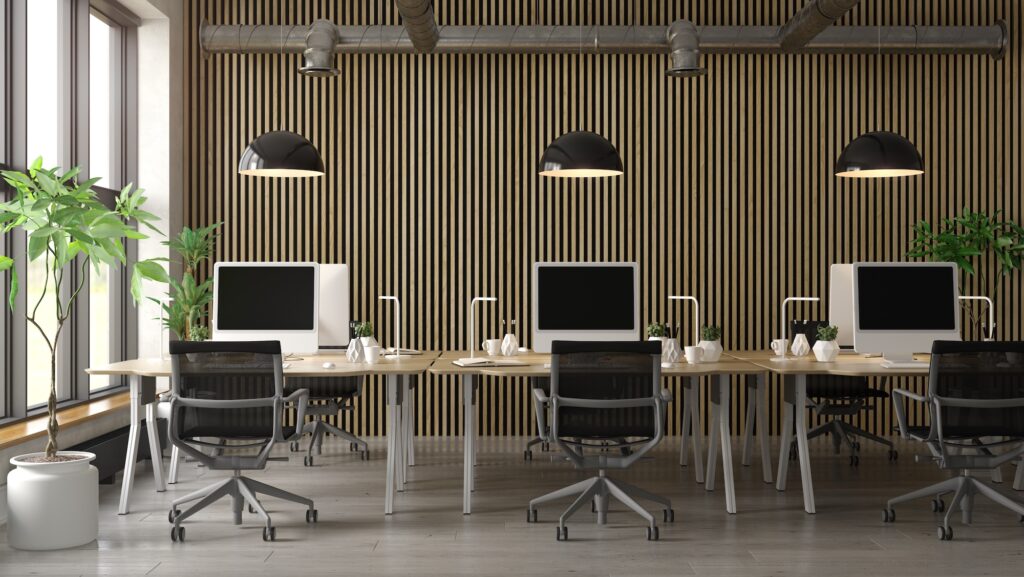
Acoustic panels are designed to absorb sound and reduce reverberation within a space. They are typically made from high-density foam, mineral wool or fibreglass wrapped in fabric, and are available in a wide range of colours, shapes and sizes to suit different interior specifications.
In open-plan environments, hard surfaces such as glass partitions, polished concrete floors and exposed ceilings create significant echo and background noise. Acoustic wall panels break up these reflective surfaces and help to reduce the overall noise level to a more comfortable and productive range.
They are commonly installed in meeting rooms, call centres, collaborative zones and reception areas, and can be specified as either wall-mounted panels or suspended baffles depending on the layout of the space.
Key applications:
- Open-plan offices with high background noise
- Meeting rooms and conferencing spaces
- Call centres and customer service environments
- Breakout areas and informal collaboration zones
Decorative Wall Panels & Wall Cladding
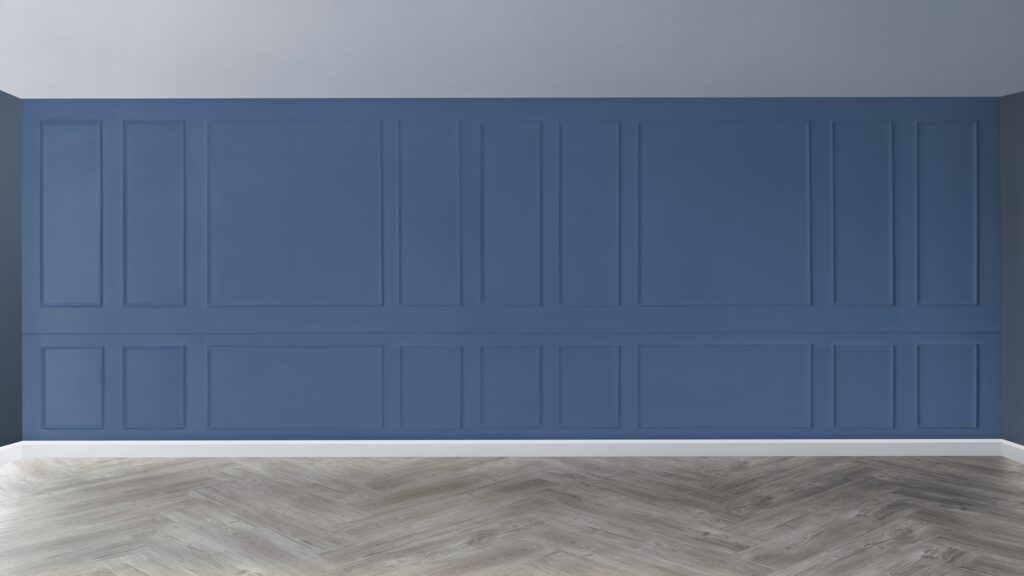
Decorative wall panels are primarily used to improve the visual finish of a workspace. They range from timber veneers and MDF panelling to high-pressure laminate (HPL), stone effect panels and textured resin systems. These are typically applied directly to existing wall surfaces and can transform a bland or dated interior without the need for a full refurbishment.
Cladding panels are a closely related category, often used in commercial interiors to cover exposed brickwork, uneven surfaces or areas where traditional plastering and painting would be impractical or cost-prohibitive.
They are particularly effective in reception areas, client-facing spaces and boardrooms where visual impact and brand reinforcement are a priority.
Key applications:
- Reception areas and entrance lobbies
- Boardrooms and client-facing spaces
- Feature walls and brand identity installations
- Covering uneven or damaged wall surfaces
Partitions & Demountable Panels
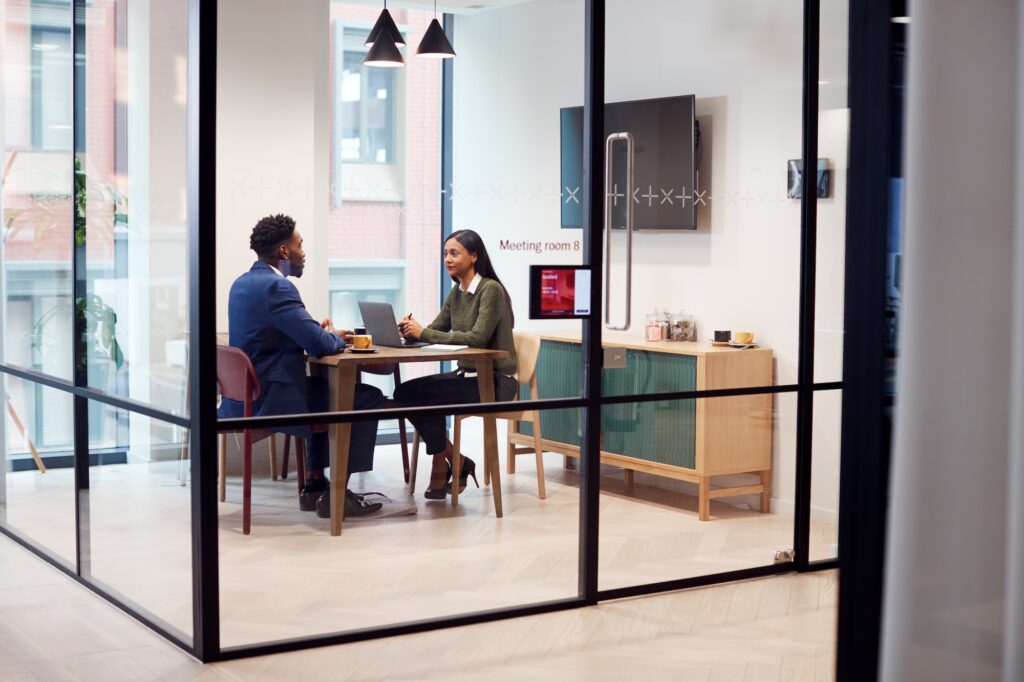
Partition panels create physical separation between areas of a workspace without the cost or permanence of a structural wall. Demountable partition systems are designed to be reconfigured or relocated as business needs change, making them a popular choice for organisations that anticipate growth or changes in headcount.
These systems typically combine a framed panel structure with infill options that can include solid panels, glazed sections, acoustic-rated inserts or combinations of all three. This flexibility allows designers to balance openness and privacy within a single installation.
From a commercial perspective, demountable partitions also retain a proportion of their value as a business asset, unlike a traditional stud partition, which is written off at the end of a lease.
Key applications:
- Creating private offices within open-plan floors
- Separating departments or teams
- Flex spaces that need to adapt over time
- Leased offices where structural changes are restricted
Hygienic Wall Panels
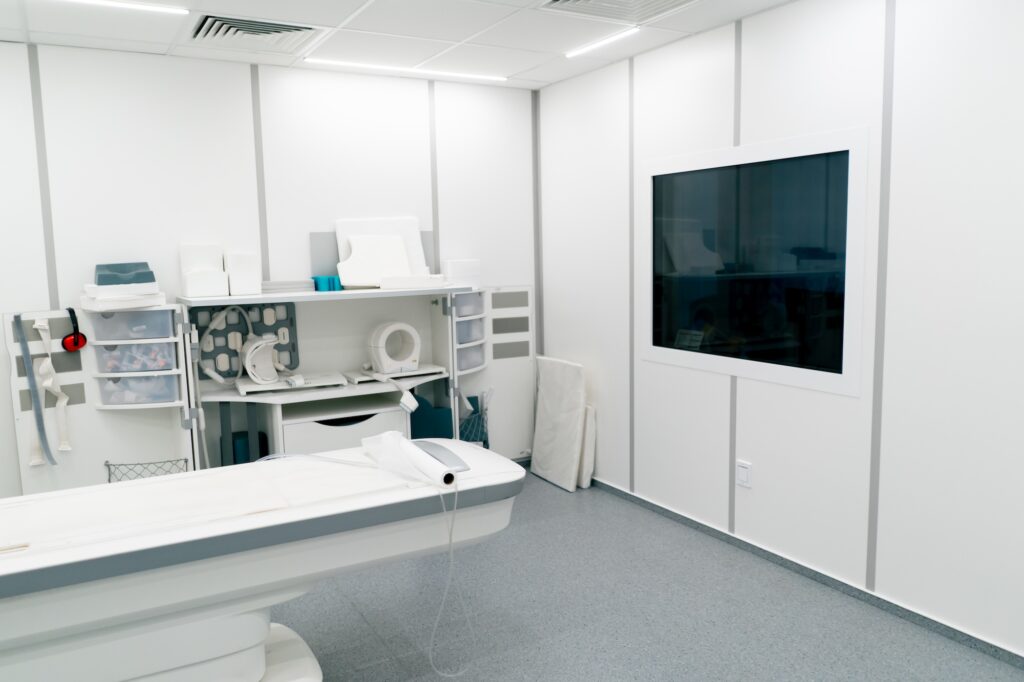
Hygienic wall panels are manufactured from materials such as PVC, fibreglass reinforced plastic (FRP) or solid grade laminate (SGL) and are designed for environments where surface cleanliness is critical. In an office context, this typically means washrooms, kitchen and break room areas, cleanrooms and any space that requires regular deep cleaning.
Unlike painted or plastered surfaces, hygienic panels have no grout lines or porous areas where bacteria can accumulate, and they resist moisture, chemicals and impact. They are also significantly easier to maintain and replace on a section-by-section basis if damage occurs.
Key applications:
- Commercial washrooms and toilet facilities
- Office kitchens and staff canteens
- Medical and pharmaceutical office environments
- Food preparation and handling areas
Living & Biophilic Wall Panels
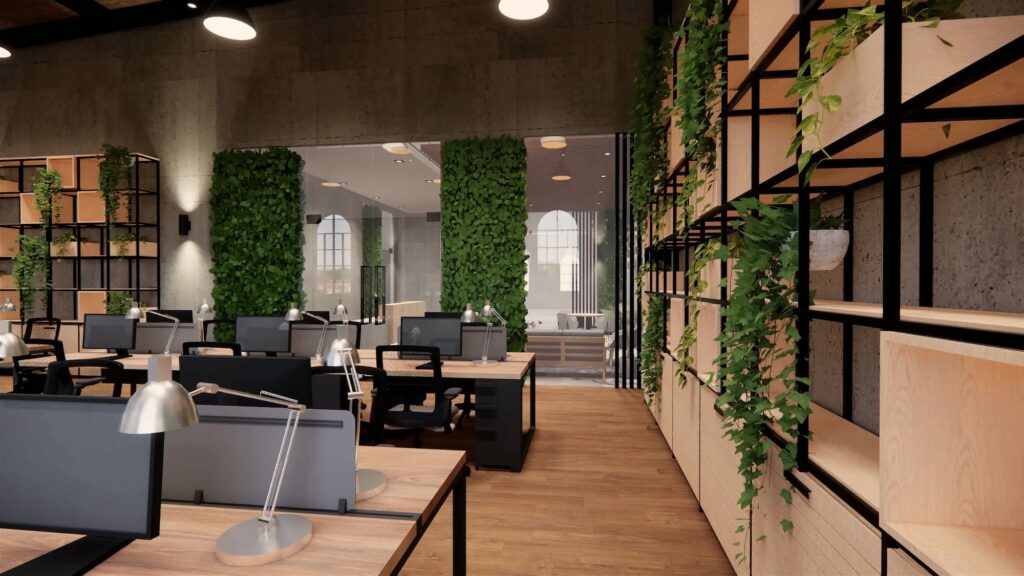
Living wall panels, sometimes called green walls or biophilic panels, incorporate real or preserved plant material into the wall surface. They are part of the broader biophilic design movement, which aims to bring natural elements into built environments to support employee wellbeing and cognitive performance.
Real living walls require an irrigation system and ongoing maintenance, whereas preserved moss and plant panels use stabilised natural material that requires no watering or specialist care. Both options offer strong visual impact and have been shown in workplace research to reduce stress and improve concentration.
Key applications:
- Reception areas and entrance lobbies
- Breakout and wellbeing spaces
- Meeting rooms where a calming environment is desired
- Brand-led feature installations
Workplace Challenges That Office Wall Panels Can Solve
Office wall panels can be used as a strategic tool to solve any number of challenges, from too much noise in the office to sprucing up dated interiors. The key is choosing the right type to suit your specific requirements.
Excessive Noise & Poor Speech Privacy
Noise is consistently ranked among the top complaints in open-plan office surveys. When employees cannot concentrate due to background chatter, phone calls or general activity, productivity suffers, and stress levels rise. Acoustic wall panels provide one of the most cost-effective ways to address this at a surface level, absorbing sound energy before it can bounce around the space and accumulate.
For spaces where speech privacy is a specific concern, such as HR offices, consultation rooms or legal teams, acoustic-rated partition panels with a high Rw (sound reduction index) rating can be specified to provide meaningful isolation between areas.
Lack of Visual Privacy and Concentration Space
Fully open layouts can leave employees feeling exposed, which is particularly challenging for roles that require sustained focus. Partition and demountable wall panels allow designers to create semi-enclosed working areas, focus pods or private offices without committing to a permanent structural solution.
Panels with frosted glazing inserts strike a balance between openness and privacy, maintaining natural light flow while reducing visual distraction for those working within enclosed zones.
Tired Or Off-Brand Interior Aesthetics
Workplaces that have not been updated for several years can feel dated and demotivating. Rather than undertaking a full strip-out and refit, decorative wall panels offer a faster and more affordable route to transformation. A single feature wall using timber veneer panels, textured laminates or backlit resin can anchor a space and give it a coherent design identity.
For businesses with strong brand guidelines, panels can be specified in corporate colours, finished with bespoke graphics or integrated with signage systems to ensure the workspace reflects the organisation’s identity consistently.
Hygiene and Maintenance Challenges in High-Use Areas
Painted plaster walls in washrooms, kitchens and heavily trafficked corridors are prone to scuffing, staining and moisture damage. The ongoing cost of repainting and repairing these surfaces can be significant over the lifetime of a lease. Hygienic wall panels eliminate this maintenance burden by providing a surface that can be wiped clean quickly and that resists the everyday wear that conventional finishes cannot withstand.
Solid grade laminate panels, in particular, are impact-resistant and do not require any coating or sealant to maintain their hygiene properties, making them a practical long-term investment.
Low Employee Wellbeing And A Lack Of Connection To The Workplace
Post-pandemic return-to-office strategies have placed employee wellbeing at the centre of workplace design. Spaces that feel harsh, clinical or impersonal are harder to justify as a destination when people have the option to work from home. Biophilic wall panels address this by introducing natural textures and tones that create a more welcoming and restorative environment.
Even non-living biophilic panels, such as those featuring natural timber patterns or stone textures, contribute to a sense of warmth that can be difficult to achieve through furniture and lighting alone.
Inflexibility In Space Planning
Organisations that grow, contract or restructure frequently face a recurring problem: their built environment cannot keep pace with changes in team size and working patterns. Traditional stud partitions are expensive to build and demolish, and every reconfiguration carries a high cost. Demountable partition panels are engineered to be moved and reinstalled without damage, making them a practical choice for businesses that need their workspace to evolve with them.
At the end of a lease, demountable panels can often be removed intact and either reinstalled in new premises or sold, which is a meaningful financial advantage over permanent construction.
How To Choose The Right Panel System For Your Office
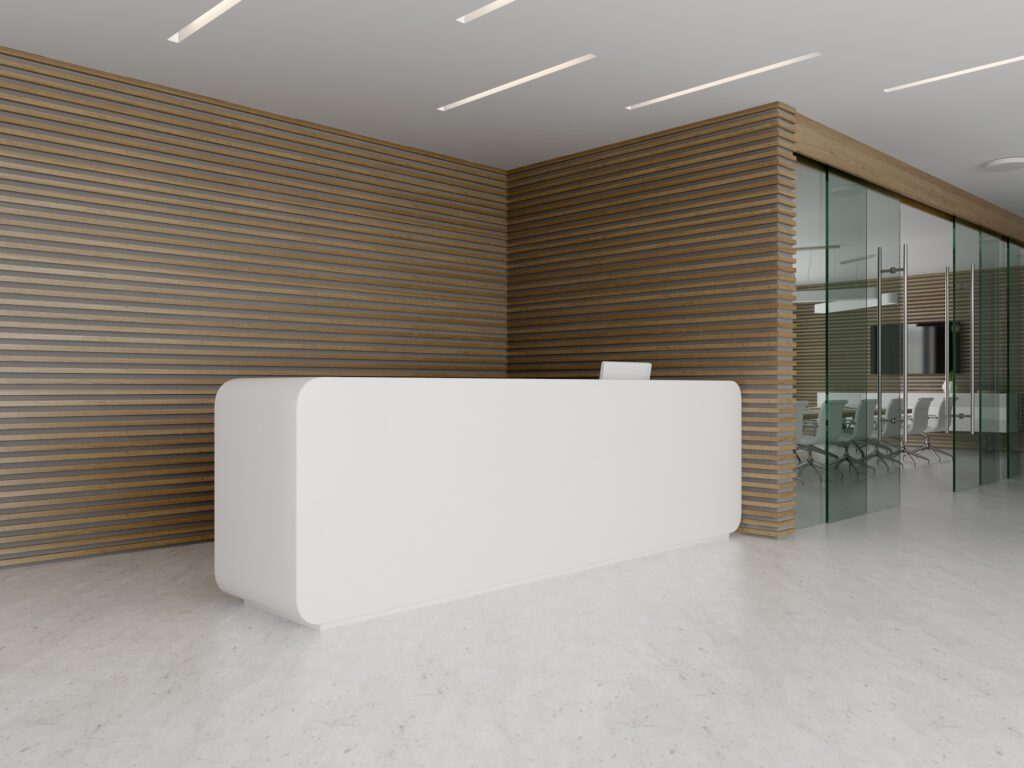
Selecting the correct type of wall panel starts with a clear understanding of the problem you are trying to solve. In many projects, more than one type of panel is required to address multiple challenges across different zones of the same office.
The key questions to work through at the outset of any specification are:
- What is the primary function of this area and what problems are occupants currently experiencing?
- Is the installation permanent or does the space need to be adaptable?
- Are there any building or landlord restrictions on structural fixings or surface alterations?
- What are the acoustic performance requirements? Are there specific Rw or NRC ratings that need to be met?
- What fire performance classification is required under current building regulations for this space?
- What is the maintenance regime for the space and how easy does the surface need to be to clean?
Working with a commercial fit-out specialist at the specification stage is advisable, particularly for partition systems and acoustic installations, where incorrect specification can result in panels that fail to deliver the expected performance once installed.
Looking For Office Wall Panels As Part Of A Fit Out? Contact ACI For A Free Quote
When specified correctly and installed to a professional standard, the right combination of panels can address noise, privacy, aesthetics, hygiene and wellbeing in the office. All of which delivers a workplace that genuinely works better for the people who use it every day.
If you are planning an office fit-out or refurbishment and would like to explore the right panel specification for your project, ACI can advise on product selection, performance requirements and installation approach from the outset.
ACI is based in Nottinghamshire and our team specialises in office design and fit outs as part of our UK nationwide service.
Talk to us about your office interior requirements by calling us on 0115 939 7572. You can also arrange a free quote by sending us a message.