If you work at a desk, getting the right office chair matters more than you think.
Research suggests that office workers spend 70% of their working day sitting down. Over the course of a year, this equates to 10,000 hours spent seated. Ultimately, this results in an average of 53,000 hours spent sitting down until the point of retirement.
With so much time spent seated at a desk working on a computer or in meetings, it pays to consider whether your office chair is fit for purpose in terms of its design and overall features.
The office furniture experts here at ACI are here to explain the 7 main types of office chairs commonly installed in UK offices. Plus, the tell tale signs that your office seating is long overdue replacement.
Task Chairs
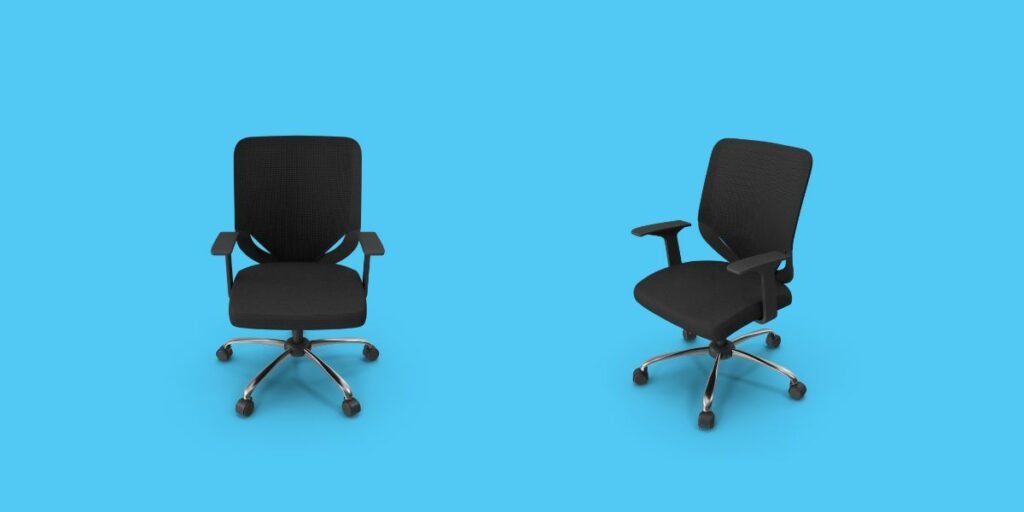
Task chairs are the standard choice for general office use and are designed to support employees through a full working day at a desk. Most models offer adjustable seat height, lumbar support and armrests as a minimum, with higher-specification versions adding seat depth adjustment, tilt tension control and improved cushioning. They are available across a wide price range and are suitable for the majority of office environments.
Good for:
- General desk-based work across most office environments
- Mixed teams where a versatile, mid-range solution is needed
- Hot-desking setups where multiple people use the same chair
Considerations:
- Entry level models may lack sufficient adjustability for all day comfort
- Not always suitable for employees with specific postural or musculoskeletal needs
- Quality varies significantly across the price range so specification matters
Executive Chairs
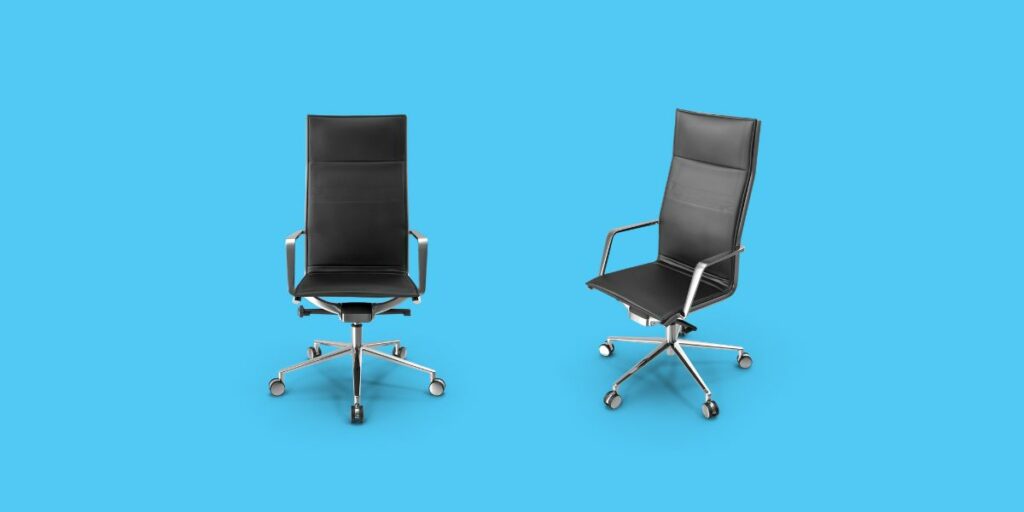
Executive chairs are larger and more substantial than standard task chairs, typically featuring high backs, integrated headrests and generously padded upholstery. They are most commonly found in senior offices and boardrooms where comfort and visual presence carry equal weight. Leather and faux leather finishes are popular in this category, though fabric options are increasingly common in contemporary workplace schemes.
Good for:
- Senior offices and boardrooms where appearance is as important as comfort
- Longer meetings or extended periods of seated work in a private office
- Environments where a premium finish is part of the overall interior scheme
Considerations:
- Bulkier than task chairs and may not suit smaller offices or tight desk configurations
- Leather and faux leather finishes can be warm and less breathable in heated offices
- Higher price point may not be justified for general staff areas
Ergonomic Chairs
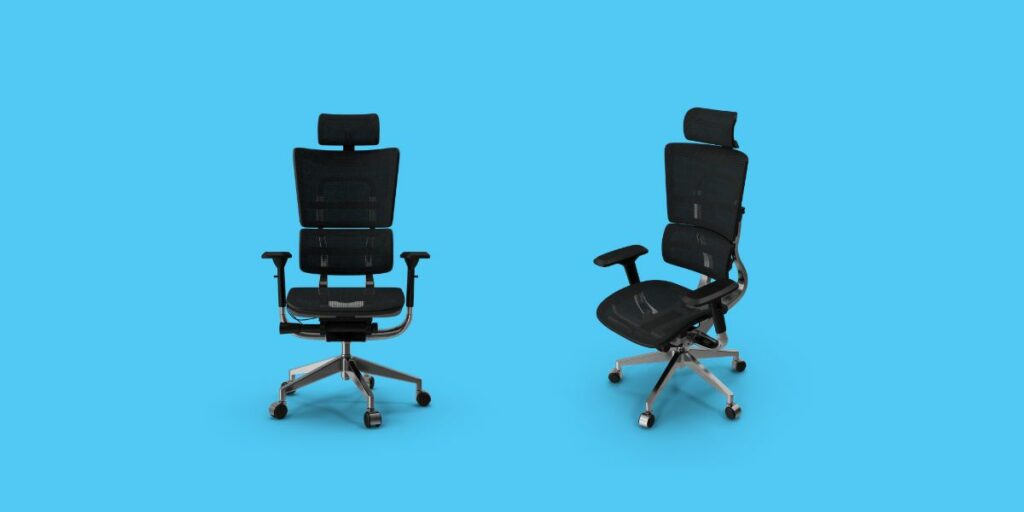
Ergonomic chairs are engineered to support correct posture over extended periods of seated work. Unlike standard task chairs, they offer a greater degree of adjustability across lumbar support position, seat depth, armrest height and tilt mechanics. This makes them particularly well suited to employees who spend the majority of their working day at a desk and who may be experiencing discomfort or musculoskeletal issues as a result of poor seating.
Good for:
- Employees who spend the majority of their working day seated
- Staff with existing back pain or musculoskeletal issues
- Organisations looking to reduce absenteeism related to posture and discomfort
Considerations:
- Higher upfront cost than standard task chairs
- The range of adjustments can feel overwhelming without a proper setup session
- Benefits are only realised if the chair is correctly configured for each individual user
Visitor Chairs
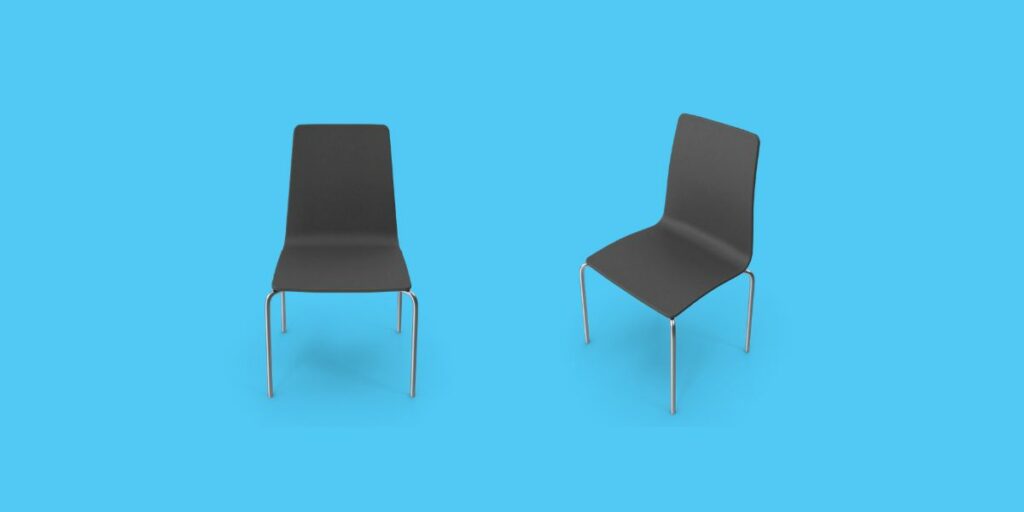
Meeting and visitor chairs are designed for shorter periods of use rather than all-day comfort. They tend to be lighter and less adjustable than task chairs, with a focus on practicality and appearance. In meeting rooms they need to stack or sit neatly around a table, while visitor chairs in reception areas are often chosen as much for their aesthetic contribution to the space as for their functional qualities.
Good for:
- Meeting rooms where chairs need to stack or store easily
- Reception areas where aesthetics and first impressions matter
- Breakout spaces requiring lightweight and easily repositioned seating
Considerations:
- Not designed for prolonged sitting so unsuitable as a primary work chair
- Limited adjustability means comfort varies between users
- Durability in high-traffic reception areas needs to be factored into specification
Collaborative & Lounge Chairs
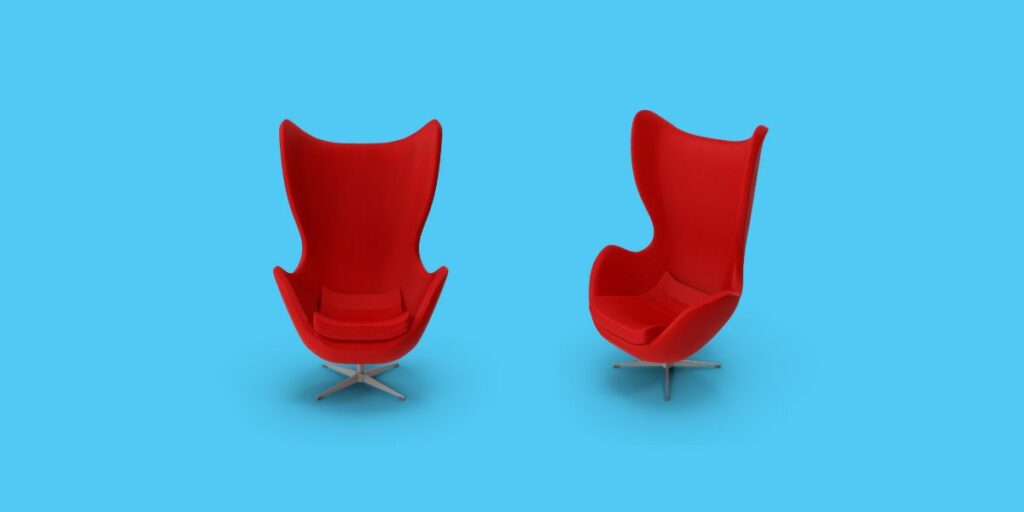
Collaborative and lounge chairs are used in breakout zones, soft seating areas and informal meeting spaces. They prioritise comfort and visual warmth over adjustability and are an important part of creating a workplace that feels welcoming rather than purely functional. From low sofas and tub chairs to high-back acoustic seating pods, this category covers a wide range of styles and is closely tied to the overall design intent of the space.
Good for:
- Breakout zones and informal meeting areas
- Creating a welcoming atmosphere in staff social spaces
- Supporting a workplace strategy that encourages movement away from the desk
Considerations:
- Not suitable for desk-based work or extended laptop use
- Harder to clean than task chairs in environments with food and drink nearby
- Requires more floor space than conventional seating arrangements
Saddle Chairs
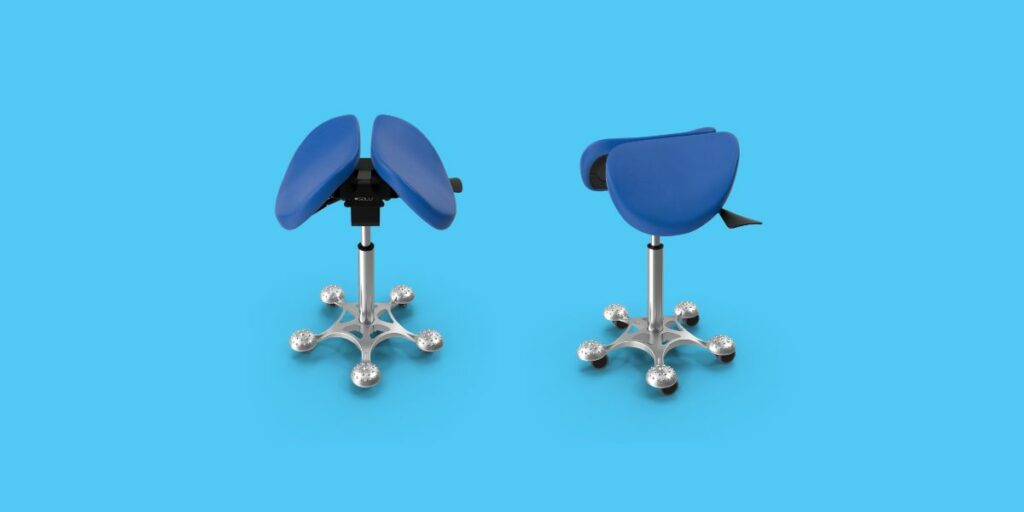
Saddle chairs take their name from their distinctive seat shape, which slopes downward at the front and encourages the hips to open into a wider angle than a conventional flat seat allows. This position tilts the pelvis forward and promotes a more natural curve in the lower spine. They are popular in environments where active sitting is encouraged and are particularly common in design studios, dental practices and other settings where the user needs to move freely around a workspace.
Good for:
- Active working environments where the user moves frequently
- Employees with lower back issues who benefit from an open hip angle
- Creative and technical studios where freedom of movement is a priority
Considerations:
- Takes time to adjust to and should be introduced gradually
- Not suitable as a sole seating option for a full working day
- May not suit all body types and requires a higher desk height than standard chairs
Kneeling Chairs
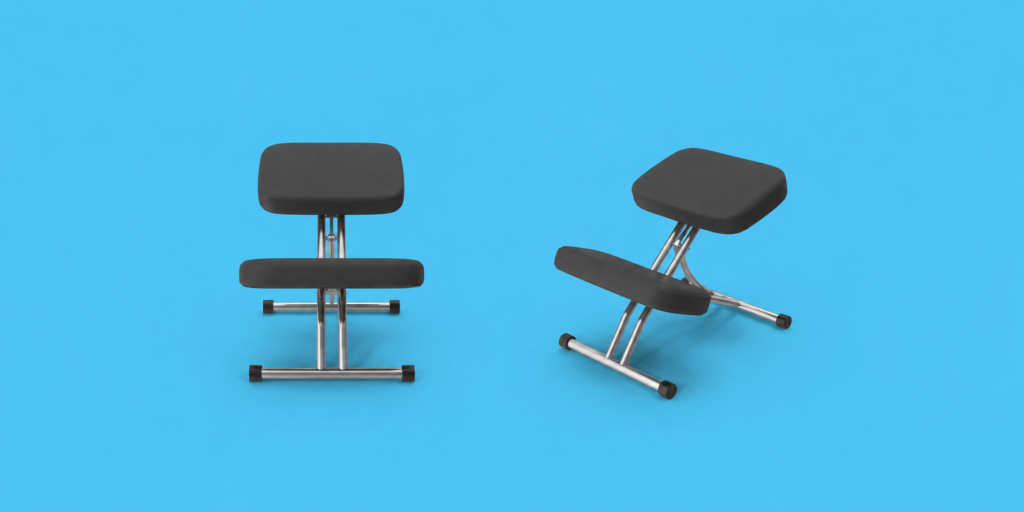
Kneeling chairs distribute the user’s weight between the seat and a padded knee rest positioned at the front of the frame. By tilting the pelvis forward and lowering the angle between the torso and thighs, they reduce compression on the lumbar discs and encourage a more upright sitting posture. They work best when used in rotation with a conventional chair rather than as a sole seating option throughout the day.
Good for:
- Users who struggle with lower back pain in conventional seating
- Encouraging an upright posture and active sitting habits
- Supplementary use alongside a standard task chair
Considerations:
- Pressure on the knees and shins can become uncomfortable over time
- No back support so not appropriate for all-day use
- Getting in and out of the chair can be awkward in a busy open-plan environment
Signs Your Office Chair Isn’t Properly Adjusted
- Your feet are not flat on the floor or you are perching on the edge of the seat to reach the ground
- Your knees are higher than your hips when seated, which tilts the pelvis back and rounds the lower back
- You are leaning forward to reach your keyboard or screen rather than sitting back against the lumbar support
- Your shoulders are raised or hunched, which usually means the armrests are set too high or too low
- You experience lower back pain or stiffness during or after long periods at your desk
- Your neck aches or feels strained, often a sign the monitor is too low or you are compensating for poor lumbar support by craning forward
- You find yourself shifting position constantly or sitting sideways in the chair to get comfortable
- The seat pan is too deep, meaning you cannot sit back fully without the front edge cutting into the back of your knees
- Your arms are not at roughly a 90 degree angle when your hands rest on the keyboard
- You feel fatigued more quickly than you would expect, as poor seating posture makes the muscles work harder to keep the body upright
How Long Should You Sit At A Desk Before Moving Around?
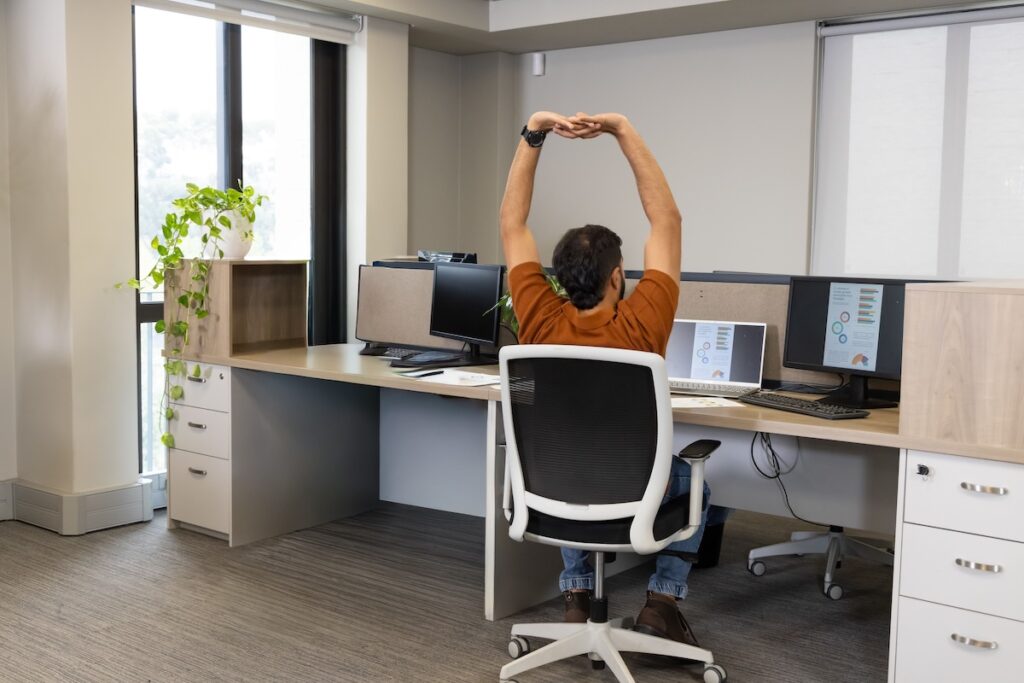
Most guidance recommends breaking up sitting time every 30 to 60 minutes. The general consensus among occupational health professionals is that no one should remain seated for longer than an hour without getting up and moving, even briefly.
Research suggests that standing or moving for just two to five minutes every hour can meaningfully offset some of the negative effects of prolonged sitting, including reduced circulation, muscle stiffness and the drop in concentration that tends to set in after extended sedentary periods.
In practice, most people find that setting a timer or using a prompt from a smartwatch or desktop app is the most reliable way to build this habit, as it is easy to lose track of time during focused work.
For those with sit-stand desks, a common recommendation is to alternate between sitting and standing in roughly 30 minute blocks rather than standing for long unbroken periods, as prolonged standing carries its own risks including lower limb fatigue and varicose veins.
The broader principle is that regular low-level movement throughout the day is more beneficial than a single lunchtime workout followed by six hours of unbroken sitting.
How Long Do Office Chairs Last?
The lifespan of an office chair depends largely on build quality, how frequently it is used and how well it is maintained. As a general rule, a good quality task or ergonomic chair used in a standard office environment should last between seven and ten years. Budget seating tends to show wear within three to five years, particularly in high-use environments where chairs are occupied for most of the working day.
The components that typically fail first are the gas lift mechanism, castors and foam seat cushioning. These can often be replaced individually, which extends the useful life of the chair without requiring a full replacement.
For organisations procuring seating at scale, build quality and warranty length are worth prioritising over upfront cost savings, as the total cost of ownership over a ten-year period will almost always favour a better specified chair.
Sit Comfortably With Office Furniture From ACI | UK Wide Supply & Installation
When in search of office furniture including chairs and desks, it’s not always easy to find a solution that will meet the needs of your team.
At ACI, our office designers and fit out specialists are here to help. Whether you’re in search of ergonomic chairs or flexible seating solutions, we can supply and install your office furniture as part of our fit out services.
Our team is based in Nottingham, but we supply and office furniture right across the UK.
To discuss your office seating needs with our team, or to get a free quote please get in touch.
You can also talk with our office furniture specialists directly by calling us on 0115 939 7572.