Poor air quality in offices can have a direct impact on productivity, particularly if employees become ill or experience reduced concentration as a result.
Therefore, more than just an annoyance, poor air quality can negatively impact not just the health of employees, but ultimately the health of the business itself.
ACI designs and installs offices across the UK. As part of our vast range of services, we also install ventilation systems to improve office indoor air quality.
In today’s post, we’re here to explain the risks of poor air quality in an office, plus the steps that employers should take to remedy the situation.
The Hidden Costs of Poor Office Ventilation

Humans are living beings, and as such, we are directly impacted by the quality of the air we breathe.
It may surprise you that many common items found in offices, such as furniture, carpets and paints can contain VOCs (volatile organic compounds). However, air pollutants can also come from many other sources, including external pollution. If an office lacks ventilation, these pollutants can build up in the air and reduce the air quality.
Some of the top risks of having poor indoor air quality in an office include:
- Energy bill increases
- Higher employer turnover rates
- Increased fatigue and headaches
- Long term health impacts
- Lower productivity
- More sick days taken (sick building syndrome)
- Reduced cognitive performance
From an office design perspective, all of these issues result in space underperformance. Meeting rooms are some of the biggest offenders, since CO2 spikes happen rapidly. A lack of ventilation in these areas means employees will become tired quickly and the meetings themselves will be less effective.
As leading UK office fit out providers, allow the experts here at ACI to remedy this through more intuitive office design, including ensuring adequate ventilation.
What Are The Fresh Air Requirements For Offices In The UK?
Employers have a legal duty to provide sufficient fresh air in line with HSE requirements. Specifically, the HSE states that the “fresh air supply rate should not normally fall below 5 to 8 litres per second, per occupant.”
To determine if an office is compliant, employers must assess air quality and also identify areas of poor ventilation. Where poor ventilation exists (i.e. due to a lack of windows), additional steps must be taken to improve the fresh air supply.
The HSE adds that employers should not rely on desk or ceiling fans in poorly ventilated areas as these won’t improve air quality.
What Causes Poor Air Quality In Offices?
Chemical pollutants – Many office materials emit volatile organic compounds (VOCs), especially when new. This includes carpets, sealants, furniture, paint and adhesives. Also, some office equipment, such as printers and copiers can also emit VOCs. Poor zoning of pollutant sources (i.e. waste zones near desks) can also worsen the issue.
High occupancy – The average person produces between 0.66kg and 1kg of CO2 per day. Therefore, when lots of people share the same space, this can cause a buildup of CO2, especially if there is inadequate ventilation. Examples of office spaces prone to this include packed meeting rooms, dense open plan offices or on hybrid days when everyone comes in at once.
Dust – Dust is a buildup of various sources including skin cells, textile fibres, building materials, soil, sand, pollen and pollution. Inadequate cleaning and ventilation can cause dust to build up which can worsen allergens.
Mould – Many offices don’t consider humidity. However, high moisture content can encourage mould to form. This can result in musty smells and can be harmful to an employee’s health.
Smoke – Smoking may be banned inside an office, although second hand smoke can still make its way into an office via clothes, hair and skin if employees smoke outside. Cigarette smoke contains more than 4,000 chemical compounds and studies suggest that more than one million UK workers are regularly exposed to second hand smoke.
How To Improve Office Air Quality
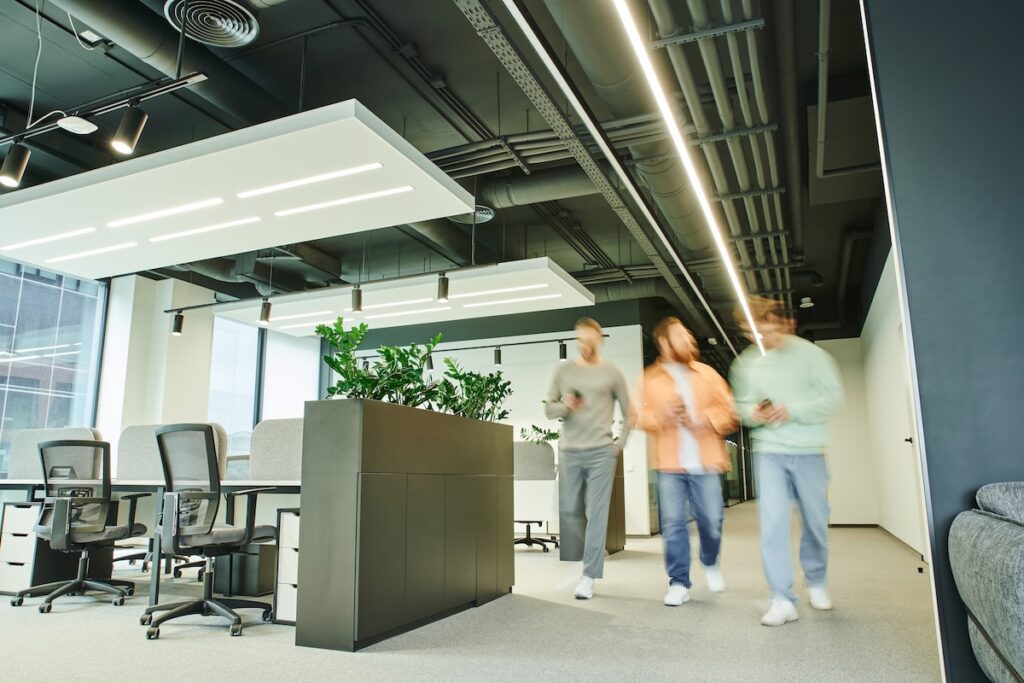
As we’ve just touched upon, employers must take steps to ensure that air quality is adequate. Sometimes, this can be solved by opening windows to allow fresh air to circulate.
However, it may be the case that your office requires more robust measures to prevent a buildup of CO2 or more harmful VOCs.
When you work with us here at ACI, we can offer your business tailored advice based on the specific challenges of your office’s indoor environment.
In particular, if your existing office feels overcrowded, then improving the layout through office space planning can help reduce CO2 buildup, especially in busy meeting rooms or smaller offices.
Additional measures to improve the air quality within your office may also include any of the following.
Make Use Of Air Quality Testing Tech
Technology has come a long way in recent years, meaning it’s now easier than ever to monitor the air quality of your office. As part of your office redesign, consider installing air quality sensors which can give alerts when certain thresholds (i.e. CO2 levels) are exceeded. Modern offices increasingly share air quality data with employees so that steps can be taken to improve air quality as needed.
Increase Fresh Air Throughout Rooms
Fresh air can be brought into your office through opening windows or by adding HVAC systems. Again, an office redesign is the perfect time to ensure your office has the required ventilation methods. For offices which lack windows, it’s especially important to have ventilation systems installed. Any ventilation systems can also be programmed to increase the amount of fresh air intake in occupied spaces, especially busy meeting rooms which can be more prone to CO2 buildups.
Upgrade Filtration Systems
Office buildings can benefit from the use of filters to ensure that any air circulating benefits from reduced odours and VOCs. Examples may include HVAC filters and activated carbon filters. These filters can be installed in ventilation systems or through the use of air purifiers.
Use Design Choices To Support Cleaner Air
When designing an office, the material selections and overall design decisions can be made with air quality in mind. For instance, opting for low VOC paints, carpets, adhesives and office furniture. Similarly, using natural materials where possible. Although plants aren’t a replacement for ventilation, using them within your office redesign can help improve air quality and boost employee wellbeing.
Regular Office Cleaning
Last but not least, offices need regular cleaning to maintain good air quality. This includes the cleaning of all surfaces, especially those prone to bacteria, mould or dust buildup. To ensure air quality isn’t negatively impacted by the cleaning itself, any products used should also be low toxicity wherever possible.
Looking To Improve Your Office Air Quality? Discover Our UK Office Design & Installation Services
Poor indoor air quality is one of the many challenges that an office redesign can solve.
At ACI, our office design services such as our CAT A office fit outs, can include ventilation as part of your project. When the air quality is improved, your whole team will benefit from working in an environment that is healthier and ultimately more pleasant to spend time in.
ACI is based in Nottingham but we provide our office design and fit our services across the UK.
Let us know about your office building challenges and how we can help by contacting us today.
Or, to chat with our friendly team please give us a call on 0115 697 1705.